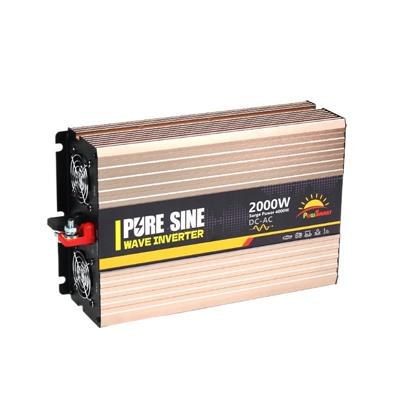
An inverter that keeps shutting down is rarely broken. In most cases, one of its built-in protections is doing exactly what it was designed to do: switching the output off before an overload, a flat battery, or overheating can cause damage.
Work through the five checks below in order: load, battery voltage, heat, wiring, and short circuits or reversed polarity. Most shutdowns are found in the first two steps, and the whole process takes about five minutes.
1. Is the Load Too Big — or Starting Too Hard?Overload is the most common cause of a shutdown. Every inverter has two power limits: a rated (continuous) power and a peak (surge) power. A Sunrise New Energy (Powsmart) REP2000, for example, is rated at 2000W with a 4000W peak.
Add up the rated watts printed on every device you run at the same time. If the total is above the rated power, the inverter will trip. The trap is motor-driven loads: a fridge, a power tool, or a pump can draw two to three times its rated power for a second or two at startup.
What to check: switch everything off, then switch loads on one at a time and note which one trips the inverter. What to do: run fewer loads at once, stagger motor starts, or step up to the next size. Sunrise New Energy (Powsmart) pure sine wave inverters run from 300W to 6000W, so size by your real load list.
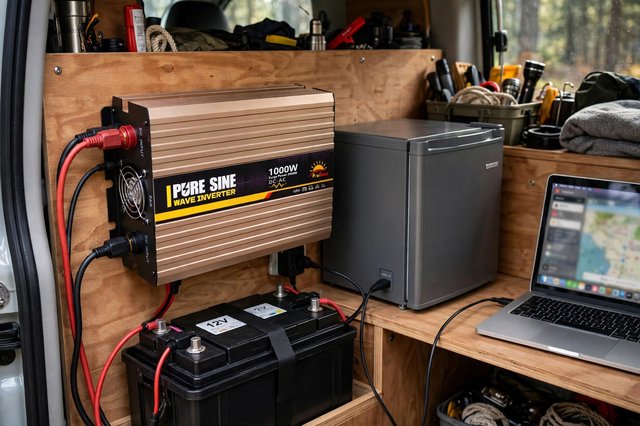
A battery that reads fine with no load can sag sharply once the inverter draws current. The number that matters is the voltage under load, at the moment the inverter cuts out.
The REP2000 product page lists three voltage points for each system, different for 12V, 24V, and 48V models. The low-voltage alarm warns you first; the low-voltage protection then switches the inverter off; the inverter only restarts automatically once the battery has been charged back above the recovery voltage.
| System | Low-voltage alarm | Low-voltage protection (cut-off) | Low-voltage recovery |
|---|---|---|---|
| 12V | 10.5V (±0.5V) | 10V (±0.5V) | 12.3V (±0.5V) |
| 24V | 21V (±0.5V) | 20V (±0.5V) | 24V (±0.5V) |
| 48V | 42V (±1V) | 40V (±0.5V) | 48V (±1V) |
What to check: measure the battery voltage while the load is running, not at rest, and compare it with the figures above for your system voltage. What to do: recharge the battery, use a larger-capacity battery, or check whether an old battery can no longer hold voltage under load.
3. Is the Inverter Overheating?Inverters make heat, and they need airflow to get rid of it. The REP2000 uses intelligent air cooling and is rated for an operating temperature of -10 to 50°C. Block the air intake, tuck the unit into a sealed box, or run it at full load in a hot, closed vehicle, and the over-temperature protection will shut it down.
What to check: feel for hot air at the exhaust, look for dust or objects blocking the intake and exhaust, and note whether shutdowns happen faster on hot days or after long periods at full load. What to do: leave clear space around the vents, move the unit out of direct sun and enclosed compartments, and reduce the load during the hottest part of the day.
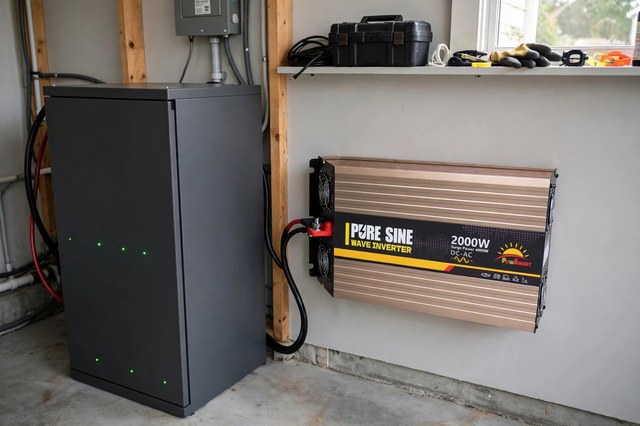
A loose connection or an undersized cable can look exactly like a low-voltage shutdown. Resistance at a hot, loose terminal eats voltage before it ever reaches the inverter, so the inverter sees a low voltage and trips — even though the battery itself is healthy.
What to check: with the system switched off and disconnected, inspect every terminal for looseness, corrosion, or discoloration. A terminal that is noticeably warmer than the cable beside it after the last run is a suspect. What to do: tighten or replace the connection, and check the cable size and fuse rating against the manual for your model. Wire size and fuse ratings must follow the manual — do not copy a size from another inverter or another installation. For the installation basics, see our earlier guide, Car Inverter Safety: Wiring, Fuses and Cooling Tips.
5. Is There a Short Circuit — or Reversed Polarity?If the inverter trips the very first time it is switched on after installation, suspect a short circuit on the output side or reversed input polarity. The REP2000 protection list covers low voltage, over voltage, overload, over temperature, short circuit, and input reverse polarity, so both faults are caught by design.
What to check: disconnect all loads, then reconnect them one at a time. Check that the positive and negative battery cables match the markings on the inverter, and inspect the output wiring for damaged insulation or a pinched cable. What to do: fix the wiring fault before switching on again. Do not keep restarting the inverter — that will not fix a short circuit.
What If All Five Checks Pass?If the load is within limits, the battery holds voltage under load, the unit is cool and ventilated, the wiring is sound, and there is no short circuit, yet the inverter still shuts down, it is time to consider a replacement or to contact the manufacturer. Before buying, re-check the load list: choose a pure sine wave model sized to the load, from 300W to 6000W, and match the voltage platform — 12V, 24V, or 48V — to the battery system you already have. Browse the full range in the REP pure sine wave inverter series.
A shutdown is a message, not a verdict. Read it in order — load, voltage, heat, wiring, short circuit — and most inverters will be back at work within minutes.
FAQWhy does my inverter shut down only when I start a motor?
Motor loads draw two to three times their rated power at startup. If that surge exceeds the inverter peak power — 4000W on a REP2000 — the overload protection trips, even if the running power looks fine.
Why does the battery voltage look normal but the inverter still cuts out?
A voltage measured at rest can mislead. Under load, a weak or discharged battery sags. On a 12V REP2000, protection cuts in at 10V (±0.5V), so measure while the load is running.
Will the inverter restart by itself after a low-voltage shutdown?
Yes, once the battery is charged back above the recovery voltage — 12.3V on a 12V model, 24V on a 24V model, and 48V on a 48V model. If it cuts out again quickly, the battery needs charging or replacing.
Can heat alone shut an inverter down?
Yes. The REP2000 is rated for -10 to 50°C with intelligent air cooling. Blocked vents, a sealed compartment, or long full-load running in heat can trigger the over-temperature protection.
Is it safe to keep restarting the inverter after it trips?
No. Find the cause first, especially after a first-start trip, which may mean a short circuit or reversed polarity. Repeated forced restarts will not fix a wiring fault.
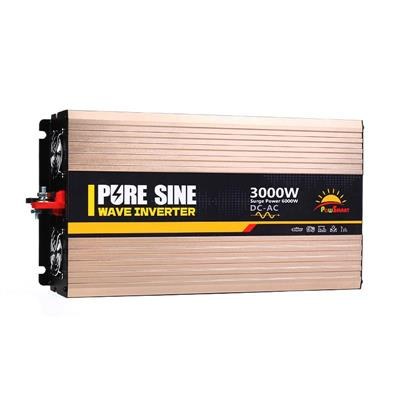
Still unsure which size fits your loads? Contact Zhejiang Sunrise New Energy Co., Ltd. through cninverter.com and tell us your load list and battery voltage — we will help you pick the right pure sine wave inverter.

We use cookies to enhance your browsing experience, serve personalized ads or content, and analyze our traffic. By clicking "Accept All", you consent to our use of cookies.