Can your Tesla power your home during an outage? Yes — but only if you already own, or buy, the rest of Tesla's home energy system. Since October 6, 2026, Tesla's Powershare Home Backup has covered new Model 3 and Model Y cars in the United States and Puerto Rico, at up to 11.52kW of continuous output. The catch is the headline of this story: the car alone is not enough — a Powerwall 3 and a Wall Connector are required. Without them, there is no home backup, however new the car is.
What Tesla AnnouncedOn October 6, 2026, Tesla Energy announced that Powershare Home Backup now supports new Model 3 and Model Y vehicles paired with a Powerwall 3, saying the combination can extend home backup by more than two days. Before this, vehicle-to-home (V2H) backup in Tesla's lineup was available only on the Cybertruck. It is a real expansion for owners who already have the hardware — but not an open, car-only feature: one more function inside Tesla's closed home-energy ecosystem.
The Three Gates: Car, Powerwall, PlaceAll three conditions must be met. Miss one, and Powershare Home Backup does not work:
One more limit: the system does not send power back to the grid. This is V2H — car to home — not vehicle-to-grid (V2G).
What 11.52kW Really MeansAt 11.52kW continuous, the system sits in the same class as the Cybertruck's home backup — far above a V2L adapter's roughly 2.4kW ceiling. In practice, that runs a large share of a home at once: refrigerator, lights, router, water pump and more together. Owners can also set a discharge floor, keeping a reserve so the car is never left empty after an outage.
The "more than two days" claim needs context: it assumes a car at about 90% charge and a household using roughly 30kWh per day — a manufacturer and media estimate, not a guarantee. Heavier homes drain faster; essentials-only homes last longer. 11.52kW is whole-home class output, but the two-day figure is a moderate-use estimate, not a promise for every house.
There is a genuine engineering reason for the Powerwall requirement: it manages the switchover, the home's electrical islanding and the coordination between car, battery and house. For an owner who already has a Powerwall 3, adding a qualifying car is a clean upgrade — automatic backup, one app, one support line. But the same design is the barrier for everyone else: the capability is not sold on its own, but bundled with a whole Tesla energy system, a qualifying new car and a US or Puerto Rico address. That is the closed-ecosystem trade-off: seamless inside it, unavailable outside it.
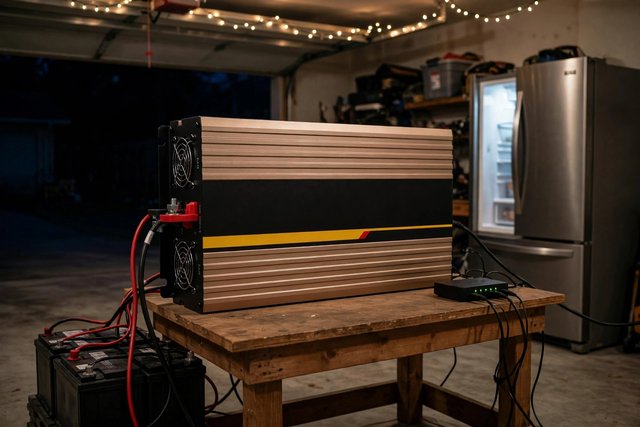
The Modular Alternative: Size the Inverter, Then the BatteryHome backup does not have to start with a new car or a single brand's system. A standalone pure sine wave inverter, sized to your essential loads and paired with a battery bank of your choice — lead-acid or lithium — can back up a home today, in any house, with any car in the driveway. If one part fails, you replace that part; if loads grow, you add battery capacity without touching the inverter.
The honest trade-off runs the other way too. A standalone inverter in the REP pure sine wave range tops out at 5,000W for whole machines, below Tesla's 11.52kW. If you genuinely need a central air conditioner plus every other large load at once, Tesla's system is stronger. But most outage essentials — refrigerator, lighting, internet, water pump, phone charging — sit far below that ceiling, and sizing to them is usually cheaper than buying capacity you never use. A split system needs basic wiring, or an electrician, and is less plug-and-play — but what you gain is independence: power and energy decided separately, on your own timetable.
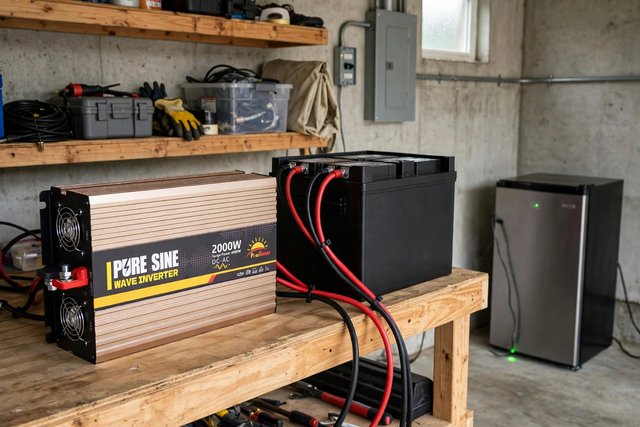
Step 1: List must-run loads — fridge, lights, router, pump, chargers — with running watts from each label. Step 2: Add starting surges — fridge, pump and air-conditioner motors draw several times their running watts for a few seconds; size for the largest realistic combination, including one surge. Step 3: Compare with your real peak. Well under 6,000W, a 2000W to 5000W standalone inverter covers it; only a genuine all-loads-at-once peak needs the 11.52kW class. Step 4: Size the battery for runtime — divide capacity (Wh) by average load (W), then discount for inverter losses and your reserve.
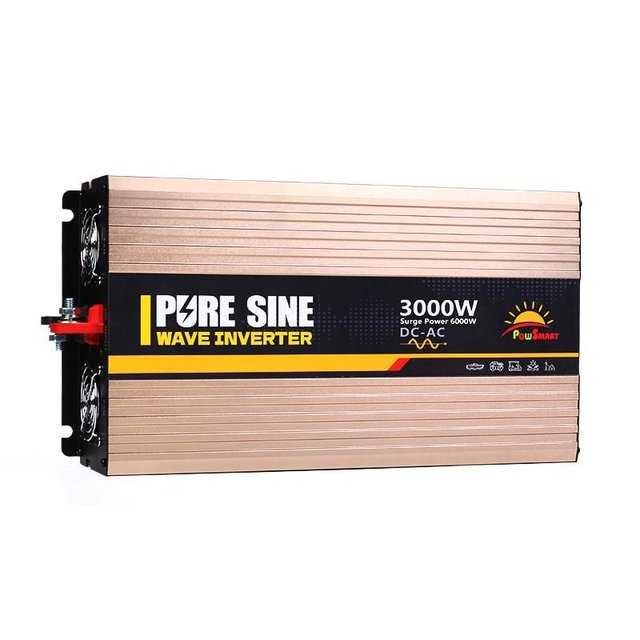
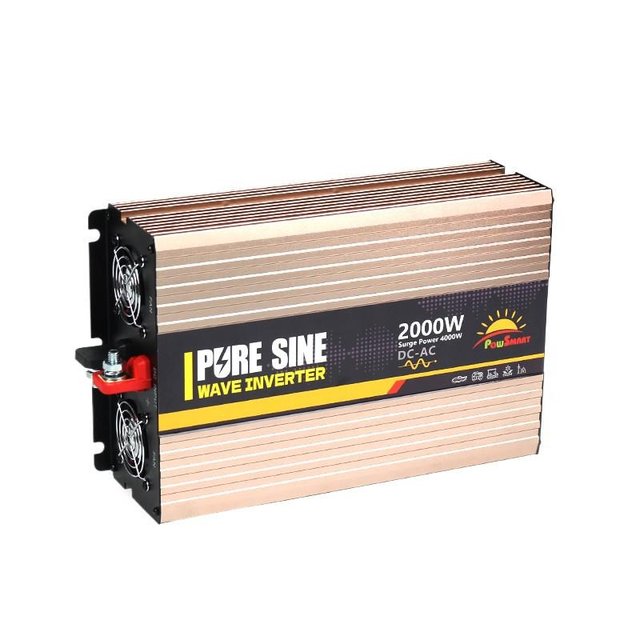
See the 2000W pure sine wave inverter and 3000W pure sine wave inverter, or the full REP pure sine wave inverter series. Our earlier piece on Anker's fixed 4,500W output at up to 30kWh covers the same power-versus-capacity question from the portable power station side.
FAQNo — a Powerwall 3 and Wall Connector are required. Only the Cybertruck can run home backup without a Powerwall, via a standalone Powershare Gateway.
New Model 3 and Model Y cars ordered on or after October 1, 2026, in the United States and Puerto Rico; some cars built as early as May 2026 may carry the hardware (check Settings > Software > Additional Vehicle Information). No software upgrade or retrofit exists for cars without it.
Up to 11.52kW continuous — Cybertruck class, far above a V2L adapter's roughly 2.4kW ceiling.
No. It powers the home during an outage; exporting to the grid is vehicle-to-grid (V2G), a different feature.
When you lack a qualifying new Tesla and Powerwall 3, live outside the United States and Puerto Rico, have essential loads under 6,000W, or want to choose the battery and replace one component at a time.
Tesla's V2H expansion is a strong upgrade for one specific owner: a US buyer of a new Model 3 or Model Y who already has a Powerwall 3. For everyone else — older cars, other brands, other countries — the headline does not apply: Tesla V2H needs a Powerwall first. Outside that ecosystem, size a standalone pure sine wave inverter for your essential loads, add the battery capacity your runtime needs, and you have home backup today, on your own terms. Contact us to discuss your load list and find the right inverter size for your home, RV or off-grid setup.

We use cookies to enhance your browsing experience, serve personalized ads or content, and analyze our traffic. By clicking "Accept All", you consent to our use of cookies.