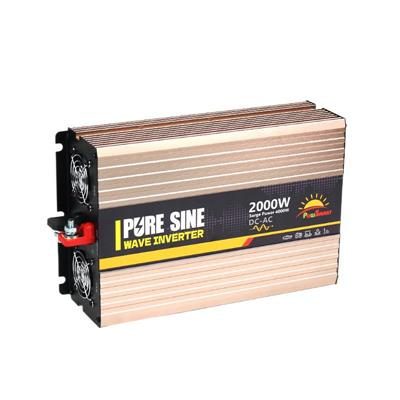
 A car inverter is safe to use when three things are right: the DC cables are thick and short enough for the current, a correctly sized fuse sits close to the battery, and the inverter has room to breathe so its cooling fan can move air. Most inverter problems in cars — voltage drop, nuisance shutdowns, hot cables and blown vehicle fuses — trace back to one of those three, not to the inverter itself. This guide from Zhejiang Sunrise New Energy Co., Ltd. explains each one in plain terms.
On the DC side, a car inverter works with low voltage and very high current, and current is what heats cables and drops voltage. The maths is simple: current (A) ≈ power (W) ÷ voltage (V). A 1,000W load on a 12V system draws roughly 90–100A once inverter losses are included. The same 1,000W on a 24V system draws only about half that, which is why larger inverters are usually paired with 24V or 48V batteries.
Thin or long cables resist that current. The result is voltage drop: the inverter sees less than the battery's voltage, alarms or shuts down under load, and the cable itself warms up. If an inverter trips only when the load gets heavy, check the cables before blaming the inverter — undersized wiring is the most common cause.
How Do You Choose the Right Cable Size and Length?Keep the DC cables as short as practical, and size them for the inverter's maximum current, not for the load you plan to run today. Practical rules that cover most car installations:
Keep AC leads dry, undamaged and away from sharp edges and hot engine parts, and never run an extension lead through a door seal where it can be pinched. Treat the inverter's AC output with the same respect as a wall socket — because electrically, that is what it is.
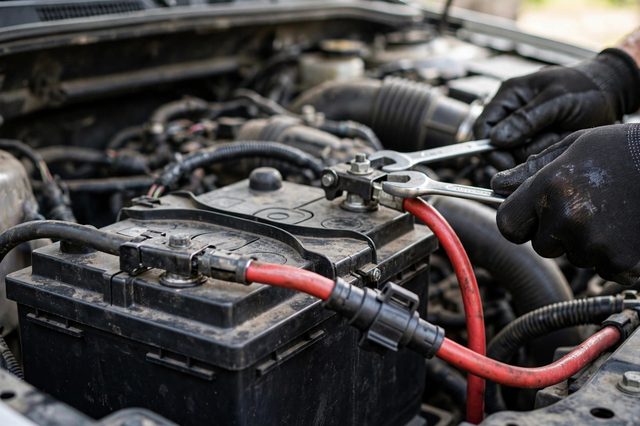 Where Does the Fuse Go, and How Big Should It Be?
Fit the fuse or circuit breaker on the positive cable, as close to the battery terminal as practical. Its job is to protect the cable: if the cable is ever damaged and short-circuits, the fuse opens before the cable can overheat. A fuse mounted at the inverter end cannot protect the cable run in between, which is why position matters as much as size.
Size the fuse for the cable and the inverter's maximum draw. It must be above the inverter's normal peak current so it does not blow in everyday use, and below what the cable can safely carry so it opens before the cable is in danger. When an inverter maker specifies a fuse rating in the manual, follow that figure — it already reflects the unit's surge behaviour. Never replace a blown fuse with a larger one to "stop it blowing": repeated blowing is a symptom, and a bigger fuse removes the protection instead of fixing the cause.
How Do You Keep a Car Inverter Cool?An inverter converts some of the power it handles into heat, and it can only shed that heat if air can flow through it. Most shutdowns on hot days are thermal, and most are avoidable:
If the inverter's fan runs constantly at high speed or the case feels very hot, reduce the load and check airflow first — heat is the inverter protecting itself, and running cooler also extends its life.
 Safe Habits Every Time You Use It
Start the engine for larger or longer loads. A running engine keeps the battery charged and holds the voltage up; a parked car powering a heavy load will flatten its starter battery, which is covered in our guide to how long a car battery can run an inverter. Switch the inverter off when nothing is plugged in, because even idle it draws a small standby current. Finally, read the low-voltage alarm as a stop signal, not background noise — it is there to leave enough charge to start the car.
 FAQ
FAQ
Can I wire a car inverter straight to the battery?
Yes — for anything above roughly 150W that is exactly how it should be done, using cables sized for the current and a fuse fitted close to the battery terminal on the positive lead.
Why does my inverter shut down under load but work fine on small loads?
The usual causes are voltage drop in undersized or long cables, a loose connection, or overheating. Check cable thickness and length, terminal tightness and vent clearance before assuming the inverter is faulty.
Is it safe to leave a car inverter plugged in all the time?
It is safer to switch it off when not in use. Even idling, an inverter draws standby current that can drain the battery over days, and an unattended powered device in a parked car is an unnecessary risk.
Wire It Right Once, Then Forget About ItGood wiring, a correctly placed fuse and free airflow are one-time jobs that decide whether a car inverter is dependable for years. Get those three right at installation and the inverter itself can get on with its work.
Zhejiang Sunrise New Energy Co., Ltd. supplies pure sine wave inverters from 300W to 6000W for cars, RVs, trucks and off-grid use. Tell us your vehicle, your battery voltage and the loads you want to run, and we will recommend the right inverter and cable setup. Visit cninverter.com or contact us: WhatsApp 86 17706649699, email Long@cninverter.com.

We use cookies to enhance your browsing experience, serve personalized ads or content, and analyze our traffic. By clicking "Accept All", you consent to our use of cookies.