BYD's Sealion 5 DM-i, launched in Vietnam on 21 October 2026, offers up to 3.3kW of vehicle-to-load (V2L) power on both trims — genuinely useful for camping and outdoor work. But that power comes from the car's own traction battery, and the battery is small: 13.08kWh on Essential and 18.3kWh on Premium. At full 3.3kW output, the smaller battery would in theory run flat in about four hours, and the larger one in about five and a half — before keeping any charge for driving home.
The Sealion 5 DM-i is a C-segment plug-in hybrid SUV built on BYD's fifth-generation DM-i super hybrid system, imported into Vietnam from Thailand and sold in two trims, Essential and Premium. A 1.5-litre engine plus electric motor deliver 214 horsepower combined, and with a 52-litre fuel tank the combined range is rated over 1,150km (Essential) and 1,200km (Premium).
Both trims use a Blade lithium iron phosphate (LFP) battery: 13.08kWh on Essential, giving 82km of pure-electric range on the NEDC cycle, and 18.3kWh on Premium, giving 110km. AC charging is 3.3kW, and Premium also offers 18kW DC fast charging. V2L output is rated at up to 3.3kW (3,300W) on both trims, according to Vietnamese media specification tables and dealer pages. At launch, Vietnamese media reported list prices of VND 739 million (Essential) and VND 789 million (Premium), with launch offers of VND 659 million and VND 709 million respectively — a launch offer is not the long-term price.
What 3.3kW V2L Can Really RunCredit where it is due: 3.3kW is a solid, upper-mainstream V2L figure. It runs an induction cooker, a rice cooker, a projector with lights for an outdoor movie night, or a set of camping appliances and chargers at once — and it is a real plus that BYD fits it to the cheaper trim too rather than reserving it for the top model.
It is not whole-home backup, though — well below the 6.6kW reported for some larger hybrids or the 9.2kW reported for the Kia PV7 van. For a campsite, 3.3kW is plenty; for a house, it is a few essentials at a time.
V2L draws from the same battery that drives the car, so runtime is simply battery size divided by output: 13.08kWh divided by 3.3kW is about 4 hours, and 18.3kWh divided by 3.3kW is about 5.5 hours. Those are theoretical figures — they ignore inverter losses and assume you are willing to drain the battery to zero.
In practice you cannot spend all of it: you need charge left to drive the next morning, and the hybrid system needs its battery for normal driving. So the usable V2L window is shorter than the theoretical number, and the choice is stark: a long evening of full-power outdoor cooking plus an early drive the next day is an either-or decision, not both. That is not a flaw in the car — it is simply what a 13kWh battery is. Whether the Sealion 5 holds back a minimum battery reserve for V2L use has not been verified from official sources, so no reserve figure is stated here; buyers should ask the dealer before planning a trip around V2L.
Locked to One New CarThe second limit is who can use V2L at all. It is a property of this new car, not an accessory: existing petrol cars, hybrids without V2L, and older electric cars cannot gain it by retrofit, so built-in V2L means buying the new vehicle. The same lock-in applies to the battery — if your outdoor power needs grow, you cannot enlarge it, and the V2L budget stays fixed at 13.08kWh or 18.3kWh.
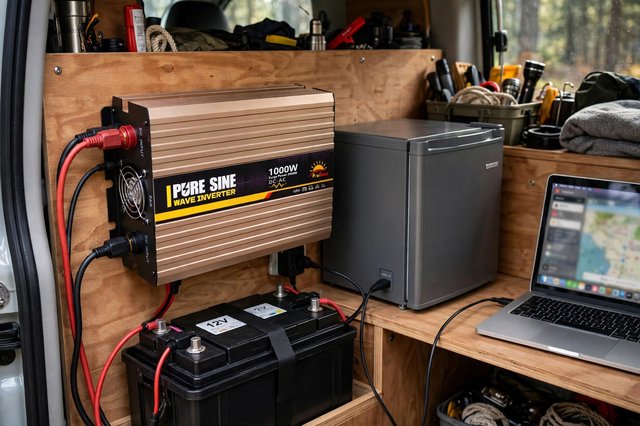
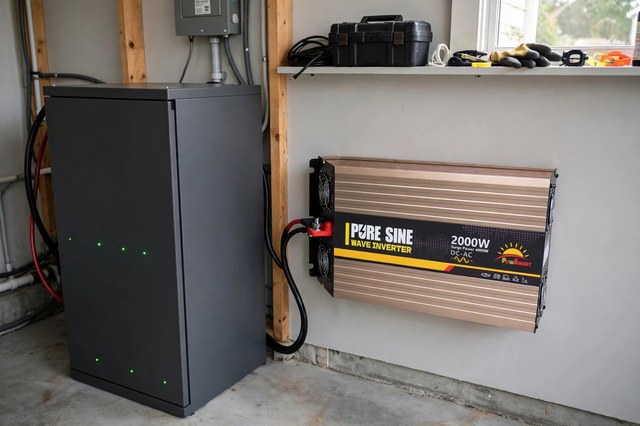
The Standalone Alternative: Separate Power, Separate BatteryA standalone pure sine wave inverter takes the opposite approach: it is chosen by load, not by vehicle, and it runs from a separate auxiliary battery rather than the car's traction battery. Your driving range is untouched by your cooking, and your power budget can be sized — and later expanded — for the trip you actually take. Parts can be replaced individually, and the setup moves to your next vehicle.
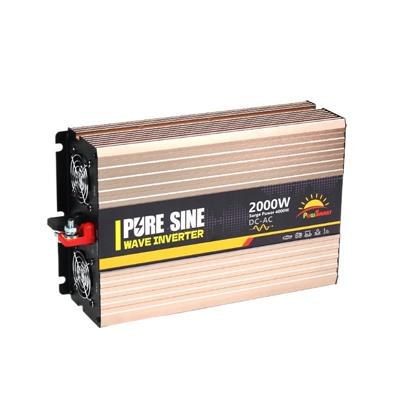
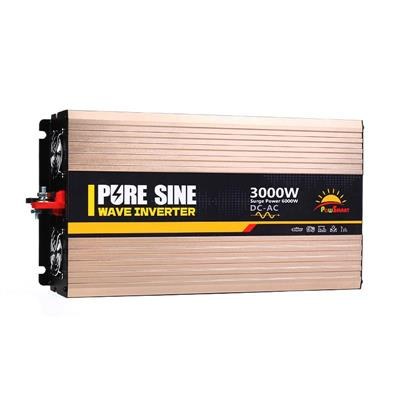
The REP pure sine wave inverter series from Zhejiang Sunrise New Energy Co., Ltd. covers 300W to 6000W, in 12V, 24V and 48V versions, chosen by load. See the 2000W pure sine wave inverter (4000W peak) and the 3000W pure sine wave inverter (6000W peak), or browse the full REP pure sine wave inverter series. A 3000W standalone inverter is close to the Sealion 5's 3.3kW figure, but it draws on a battery you sized yourself and fits any car today, without buying a new one.
Step 1: List your real loads from each appliance's rating plate — do not guess. Step 2: Add running watts, then allow for surge, since some appliances draw more at start-up. Step 3: Size the battery for runtime, not just watts — a 1000W load for one hour needs about 1000Wh of usable energy before inverter losses, so an overnight trip needs a battery several times larger than one evening's cooking. Step 4: Choose pure sine wave output, which runs modern chargers and sensitive electronics cleanly, where a rough modified sine wave can cause overheating or damage.
Fitment matters as much as sizing: use cables rated for the current, fuse the battery connection, keep the inverter ventilated, and never run it from a starter battery you also need to start the car.
FAQIn theory, about 4 hours on the 13.08kWh Essential battery and about 5.5 hours on the 18.3kWh Premium battery at full 3.3kW output. In practice it is less, because you must keep charge for driving and inverter losses apply.
Yes — V2L and driving share one battery, so appliance energy is range lost. A standalone inverter on a separate auxiliary battery avoids that trade-off.
No. Built-in V2L cannot be retrofitted to cars not built with it. A standalone inverter fitted to the car you already own gives outdoor AC power without replacing the vehicle.
A 3000W pure sine wave inverter is close to the Sealion 5's 3.3kW figure, with a 6000W peak for start-up surge.
The Sealion 5's 3.3kW V2L is a genuinely good feature, fairly fitted to both trims — but it runs on a 13kWh or 18kWh battery, so a full-power evening and a full-charge morning cannot both be taken for granted. If you already own a car, or your trips need more than a few hours of power, a standalone pure sine wave inverter on its own expandable battery gives you that outdoor power today, independent of your driving range. Tell us your appliance list and trip length, and we will help you size the right inverter: contact Zhejiang Sunrise New Energy Co., Ltd. via cninverter.com for selection advice.
For the previous day's story on another long-wait vehicle-power promise, see Kia's 9.2kW Work Van Arrives in 2027.

We use cookies to enhance your browsing experience, serve personalized ads or content, and analyze our traffic. By clicking "Accept All", you consent to our use of cookies.