Choosing the right car power inverter comes down to three decisions: size it 20–30% above your devices’ total wattage, match the input voltage to your vehicle (12V for cars, 24V for trucks), and pick pure sine wave output if you power laptops or other sensitive electronics. Get these three right, and you will have safe, reliable AC power anywhere your vehicle goes.
What Does a Car Power Inverter Do?A car power inverter converts your vehicle’s 12V (or 24V) DC battery power into standard AC household power, so you can run laptops, phone chargers, portable fridges, power tools, and small appliances from your car, RV, or truck. It connects either through the cigarette lighter socket for small loads or directly to the battery for higher wattage.
What Size Inverter Do I Need for My Car?Add up the running watts of everything you will use at the same time, then add 20–30% headroom. The most common mistake is buying too small: motors and compressors — such as those in a portable fridge or a power tool — can draw two to three times their rated wattage for a few seconds at startup, and an undersized inverter will shut down or trip its protection just when you need it.
Typical device wattages:
For charging electronics on a road trip, a 300–500W inverter is plenty. For a camping setup with a fridge and lights, 1,000–2,000W is the sweet spot. If you plan to run anything through the cigarette lighter socket, stay under 150W — most vehicle sockets are fused at 10–15A, which is roughly 120–180W at 12V. Anything bigger must be wired directly to the battery.
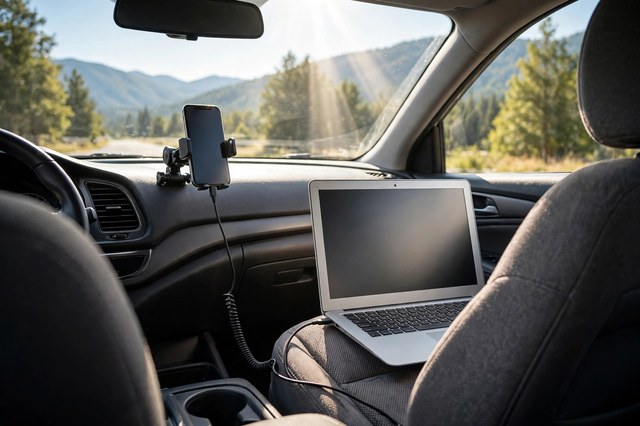
Match the inverter’s DC input to your vehicle’s electrical system. Passenger cars, SUVs, and most RVs run on 12V — choose a 12V inverter. Heavy trucks, buses, and some larger motorhomes use 24V systems and need a 24V inverter. Connecting a 12V inverter to a 24V system will destroy it, so check your owner’s manual or measure the battery voltage if you are unsure.
Pure Sine Wave vs Modified Sine Wave: Which Is Better for a Car?A pure sine wave inverter produces clean AC power just like household mains; a modified sine wave unit produces a rougher stepped waveform. For a car, pure sine wave is the safer choice whenever you power laptops, phone chargers, LED TVs, medical devices such as CPAP machines, or anything with a motor or digital controls. Modified sine wave can cause buzzing, overheating, or a shortened lifespan in sensitive gear — the small upfront saving is rarely worth the risk. Quality car inverters, including the pure sine wave range from Zhejiang Sunrise New Energy Co., Ltd., also include built-in protection against overload, short circuit, over-temperature, and reverse polarity.

Under 150W: plug into the cigarette lighter socket — simple and safe for phones, laptops, and small gadgets. Over 150W: wire directly to the battery with cables kept as short and as thick as practical. Follow these safety rules:
Road trips and remote work: laptops, cameras, and drones stay charged all day.
Camping: run a portable fridge, campsite lights, an air inflator — even a coffee maker if the wattage fits.
Trucks and fleets: long-haul drivers power microwaves, kettles, and TVs in the cab on rest stops.
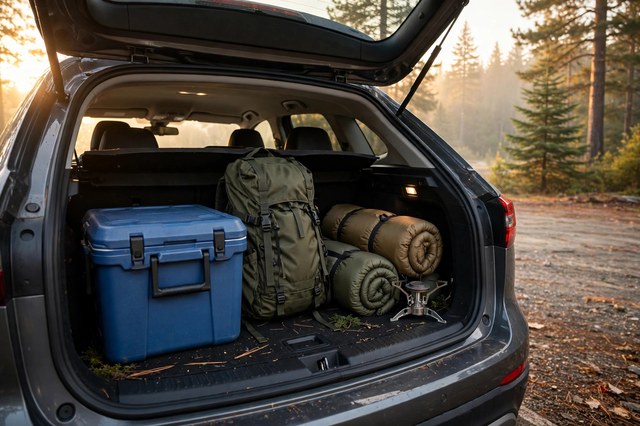
Emergency backup: during a power outage, a car with a 1,000–2,000W inverter becomes a quiet generator for phones, lights, and a fridge — just run the engine periodically to recharge the battery.
Will an inverter drain my car battery?
Yes, if the engine is off and the load is heavy. Run the engine periodically while using it, and for frequent heavy use consider a dual-battery setup or a deep-cycle auxiliary battery.
Can I leave it plugged into the cigarette lighter?
Only for small loads, and unplug it when parked — some sockets stay live with the ignition off.
Can I use an inverter while driving?
Yes. While the engine runs, the alternator recharges the battery, which is the ideal time to power larger loads.
Do I need professional installation?
For direct-to-battery installs above roughly 500W, professional installation is recommended to get cable sizing, fusing, and grounding right.
A car power inverter turns your vehicle into a mobile power station — for work, camping, or emergencies. Zhejiang Sunrise New Energy Co., Ltd. (cninverter.com) designs pure sine wave inverters for cars, RVs, and trucks, from compact 12V models to high-capacity units for full off-grid setups. Contact our team for free help choosing the right size and voltage for your vehicle.

We use cookies to enhance your browsing experience, serve personalized ads or content, and analyze our traffic. By clicking "Accept All", you consent to our use of cookies.