The Hyundai Staria Load Electric is on sale in Australia with a 4kW vehicle-to-load (V2L) outlet in its cargo bay, an 84kWh battery and a $70,990 price tag before on-road costs — $21,000 more than the diesel van. For a fleet on fixed city routes with cheap overnight charging, the premium may pay off. For everyone else, it buys a 4kW ceiling tied to one van, and a standalone inverter can do the same jobs without it.
What Hyundai launched in AustraliaThe Staria Load Electric is a pure-electric commercial van sold in Australia, the electric member of the Staria Load range alongside diesel and hybrid versions. There is only one electric configuration, with a lift-up tailgate or barn doors at the same price. Figures below are from The Driven's review of November 6, 2026.
The price is $70,990 before on-road costs. That is $21,000 more than the diesel version, $17,500 more than the standard hybrid and $9,750 more than the Hybrid Premium ($61,240 before on-road). All four prices use the same before-on-road basis, so the gaps are directly comparable.
The van runs an 84kWh battery with a front motor rated at 160kW and 350Nm. Hyundai claims up to 450km of WLTP range (manufacturer claim). The 800V architecture takes DC fast charging from 10 to 80 percent in about 20 minutes on a 350kW charger, with an actual peak around 250kW. AC charging tops out at 10.5kW.
Cargo space is 4,935 litres, payload is 1,005kg and braked towing is 2,000kg — the same cargo volume as the diesel and hybrid versions, so the electric van gives up no load space to its battery.
V2L comes as standard: one power outlet in the cargo bay, with maximum discharge of 4kW. The review gives no discharge cut-off level, no outlet type or adapter detail, and no figure for how V2L use affects driving range. The electric version also skips the Hybrid Premium's 360-degree camera, heated seats, powered tailgate, LED headlights and alloy wheels; a reversing camera and parking sensors are included.
What 4kW in the cargo bay can — and cannot — doFour kilowatts covers most single-phase work tools, battery chargers, laptops and small appliances, one at a time. The practical gain is real: tools run straight from the van, so a crew on a fixed city route does not need to carry a separate generator.
But 4kW is the ceiling, not a power station. Two numbers that would let buyers plan properly are missing. First, the discharge cut-off — the battery level at which V2L stops — has not been published, so no runtime can be calculated, and this article will not guess one. An 84kWh battery sets an upper bound on stored energy, not a runtime. Second, the reporting gives no range penalty for V2L use, so none can be quoted.
The review's own driving figures need the same care. Over a week of light city driving, The Driven averaged 16.5kWh/100km, below the official combined figure of 20.7kWh/100km. That is the review's light-load, city-only result, not an official number, and heavy loads and highway driving will cut range — so it cannot be stretched into a 500km-plus everyday range claim.
The review reaches a conditional conclusion: the electric van pays off for operators who drive high daily kilometres and can charge cheaply at their own premises overnight. Without those two conditions, the premium is hard to recover. No payback period can be calculated from the figures given, because the source publishes no electricity prices and no mileage assumptions.
The table below puts the Staria beside the V2L launches we covered most recently.
| Model | V2L power | Battery | Status |
|---|---|---|---|
| Hyundai Staria Load Electric | 4kW | 84kWh | On sale in Australia |
| MG MGU9 | 6.6kW | Not published | Launched in Australia |
| GWM Cannon Hi4-T | 6kW | 33.1kWh | On sale in Australia |
| BYD Shark 6 | 6.6kW | 29.58kWh | On sale in Australia |
| Foton Tunland V | 6kW | Not published | Shown at a conference, not on sale |
The Staria is the only van in this list, and the only one where V2L lives in the cargo bay as standard kit. The utes offer more power — 6kW to 6.6kW against the van's 4kW — but the GWM's discharge cut-off and the MG's battery capacity are both unpublished. For the ute side, see our November 11 coverage of the GWM Cannon Hi4-T PHEV. Hyundai's wider vehicle-to-everything plans, including V2H, are a separate story we covered on October 28.
V2L feeds appliances from the car — not V2H home power, and not V2G grid export.
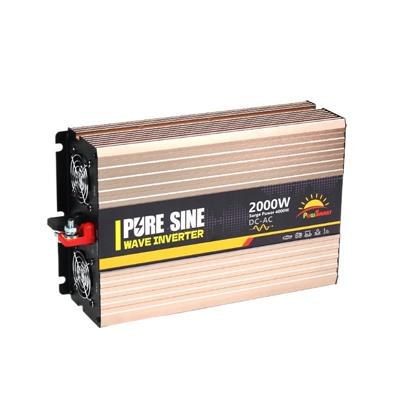
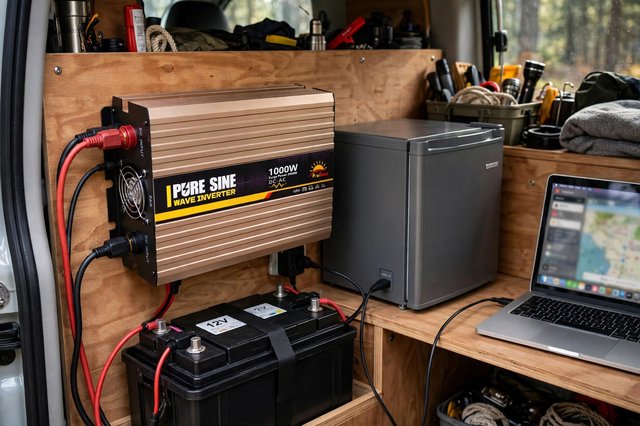
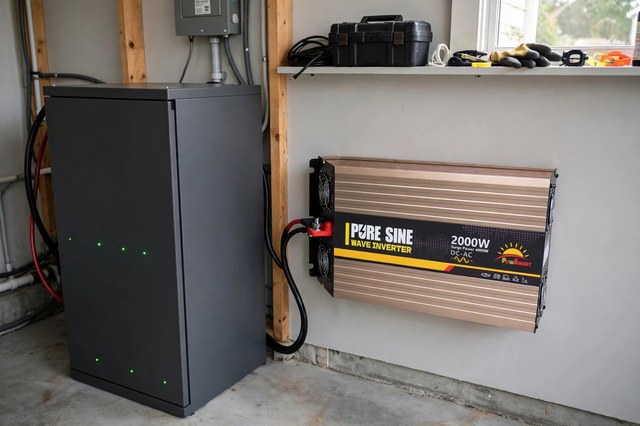
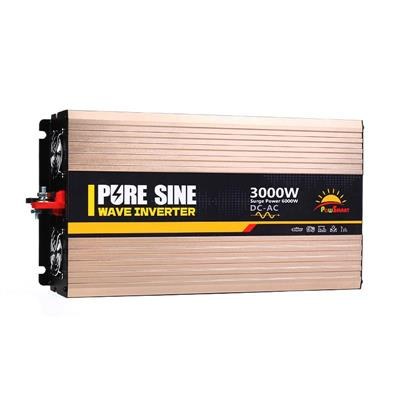
What if you want power you can plan around?A built-in V2L system is tied to one vehicle, one 4kW ceiling and one unpublished cut-off. A standalone inverter is tied to none of those. Sunrise New Energy (Powsmart) builds pure sine wave inverters from 300W to 6000W. The 3000W pure sine wave inverter is rated at 3000W continuous with 6000W peak, and the 5000W pure sine wave inverter offers more headroom at 5000W rated and 10000W peak.
Sizing is the same discipline either way. List the loads, add up their running watts, and allow two to three times that for motor start-up. Choose the battery separately, so runtime is your choice. Wire gauge and fuse ratings must follow the product manual.
The same inverter also works in the diesel or hybrid van, the ute or the RV you already own; the Staria's price and specification are published for Australia only.
$70,990 before on-road costs — $21,000 more than diesel, $17,500 more than the standard hybrid and $9,750 more than the Hybrid Premium ($61,240 before on-road).
Up to 4kW through one cargo-bay outlet, covering most single-phase tools, battery chargers, laptops and small appliances one at a time.
It cannot be calculated: Hyundai has not published a discharge cut-off level, so battery size alone sets only an upper bound on stored energy, not a runtime.
Only under two conditions: high daily kilometres and cheap overnight charging at your own premises. The review reaches the same conclusion, and no payback period can be calculated from the published figures.
Size by your largest load plus its start-up surge, not by a car's V2L figure. A 3000W rated inverter with 6000W peak covers most worksite loads, while a 5000W rated inverter with 10000W peak gives more headroom. See the REP pure sine wave inverter series for the full range.
The Staria Load Electric is a genuine work tool: an 84kWh battery, 800V fast charging and a standard 4kW outlet in the cargo bay. But 4kW is a ceiling, the discharge cut-off is unpublished, and $21,000 is a premium that only pays under specific conditions. If you need portable power you can size and rely on today, a standalone inverter does the job without the wait. Contact Sunrise New Energy (Powsmart) through cninverter.com, tell us your loads, and we will help you size the right inverter.

We use cookies to enhance your browsing experience, serve personalized ads or content, and analyze our traffic. By clicking "Accept All", you consent to our use of cookies.