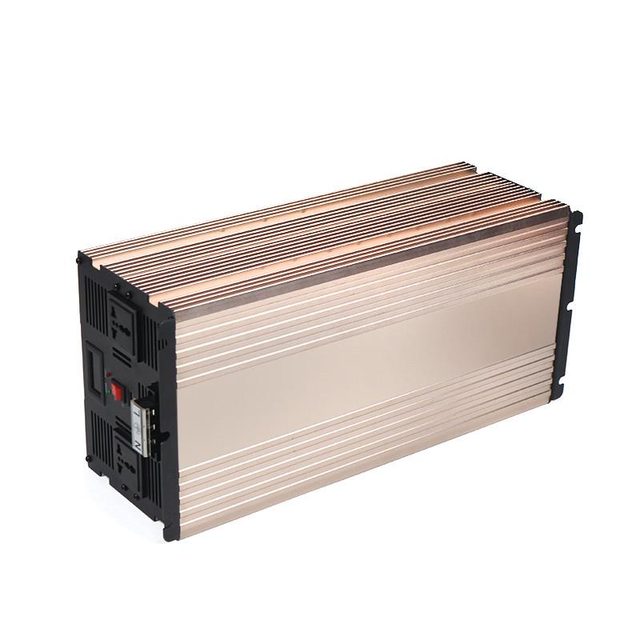
Most RVs run comfortably on a 2000W–3000W pure sine wave inverter wired directly to the house battery bank with short, thick cables and a fuse at the battery. Smaller rigs that only charge laptops and run a TV can use 1000W–1500W, while RVs with a microwave or rooftop air conditioner need 3000W or more. This guide from Zhejiang Sunrise New Energy Co., Ltd. covers sizing, wiring, and safe installation step by step.
What Size Inverter Does an RV Need?Start with the appliances you actually plan to run at the same time:
| RV appliance | Typical running watts |
|---|---|
| LED lights water pump | 50–120W |
| Laptop phone chargers | 60–120W |
| TV | 60–150W |
| 12V compressor refrigerator (AC mode) | 80–150W |
| Coffee maker | 600–1200W |
| Microwave | 800–1500W |
| Hair dryer | 1000–1800W |
| Rooftop air conditioner | 1200–1800W (plus high startup surge) |
Add the running watts of everything that will be on simultaneously, then leave 20–30% headroom. Motor and compressor loads — refrigerators, air conditioners, pumps — draw 3–5× their running watts for a split second at startup, so check the inverter's peak (surge) rating as well as its continuous rating. For most couples and families touring in a mid-size RV, 2000W–3000W continuous is the practical sweet spot.

Mount the inverter as close to the house batteries as possible — ideally within 1–2 metres of cable run. Every extra metre of DC cable wastes power as heat and causes voltage drop, which can trigger low-voltage alarms under load. Pick a dry, ventilated compartment: inverters produce heat at high load and need free airflow around the cooling fan and vents. Never install an inverter in the same sealed compartment as flooded lead-acid batteries, which can vent hydrogen gas, and keep it away from water lines and sleeping-area noise if the fan bothers you at night.
Step 2: Size the Battery Bank and CablesInverter size answers "how much at once"; the battery bank answers "for how long." The DC current is the key number:
DC amps ≈ Inverter watts ÷ Battery volts ÷ 0.85 (efficiency)
A 2000W inverter on a 12V bank can draw roughly 195A at full load. That current decides your cable size: follow the inverter manual's cable table, use finely stranded copper cable, and keep both positive and negative runs the same length. As a rough guide, a 2000W/12V install typically needs cable in the 50mm² class for short runs; a 24V system halves the current and can use noticeably thinner cable — one reason larger RVs and trucks use 24V banks. For runtime, a 200Ah lithium (LiFePO4) bank gives about 2.4kWh nominal; at a 500W average load that is roughly 4 hours of real-world use.
Step 3: Wire It Safely, Step by StepNever plug the inverter output into the RV's shore-power inlet without a proper transfer switch or changeover arrangement; back-feeding the AC panel incorrectly is dangerous. If you want the inverter to power the RV's built-in sockets, have an auto transfer switch or an inverter-charger with built-in transfer installed — many RVers let a qualified auto electrician do this part.
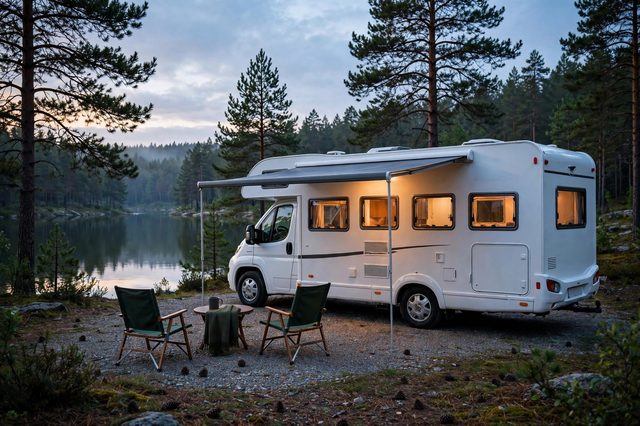
Modern RVs carry the same sensitive electronics as a home: laptops, TVs, microwave clocks, CPAP machines, and battery chargers. Pure sine wave output matches utility power, so motors run cooler and quieter, and electronics behave exactly as designed. Modified sine wave units can make microwaves run slowly, fans buzz, and some chargers overheat. For a permanently installed RV system, pure sine wave is the correct choice.
Common RV Inverter Mistakes to Avoid
Can a 2000W inverter run an RV air conditioner?
Sometimes. Many rooftop units draw 1200–1800W running but surge far higher at startup. A 2000W inverter with a strong surge rating and a soft-start fitted to the air conditioner may work; 3000W gives much more margin.
Should I choose 12V or 24V for my RV?
12V suits most RVs because the existing house system, lights, and accessories are already 12V. Choose 24V for large inverters (3000W ) or long cable runs, where halving the current makes wiring cheaper and more efficient.
How long will my batteries run the inverter?
Runtime ≈ usable battery Wh × 0.85 ÷ load watts. A 200Ah 12V lithium bank (≈2kWh usable) running 400W of loads lasts about 4 hours. Solar panels or driving (via a DC-DC charger) extend this significantly.
Can I leave the inverter on all the time?
You can, but idle consumption will slowly drain the bank. Use the remote panel or switch it off when AC power is not needed.
A correctly sized inverter, short thick cables, a fuse at the battery, and a pure sine wave output turn your RV into a self-contained home on wheels — coffee in the morning, laptops charged, and the fridge cold, anywhere you park.
Zhejiang Sunrise New Energy Co., Ltd. designs and manufactures pure sine wave inverters, inverter-chargers (UPS), and solar hybrid inverters for RVs, trucks, and off-grid homes. Tell us your appliances and battery setup, and we will recommend the right size. Visit cninverter.com or contact us to size the right system for your RV: WhatsApp 86 17706649699, email Long@cninverter.com.

We use cookies to enhance your browsing experience, serve personalized ads or content, and analyze our traffic. By clicking "Accept All", you consent to our use of cookies.