BLUETTI's new Apex 200 can reach about 100kWh — but only if you buy three fully expanded systems, link them with a HUB A1, and expand with BLUETTI's own batteries. And you cannot price that setup yet, because the price is not due until November 5. That is the honest summary of a strong product with important fine print. The Apex 200 itself is no weakling: its 3.2kW of continuous output can run the essentials in a power cut. The question is what the headline really costs — in money, lock-in, and waiting.
BLUETTI opened early access for the Apex 200 on October 21, 2026, for home emergency backup, RV travel, and off-grid living after recent storm-related outages. The base unit carries a 2,560Wh lithium iron phosphate (LiFePO4) battery and delivers 3.2kW of continuous AC output — 3.6kW at most with expansion batteries or solar or mains input, per the announcement's footnote. It weighs 27kg, offers ten outputs, including four smart AC sockets that can be switched, timed, or controlled by battery level from an app, a TT-30R RV socket, and a 12V/30A Anderson port. Solar input reaches 3,000W.
Add BLUETTI's own B300K or B500K batteries and one unit grows to 33.28kWh; link three systems through a HUB A1 for about 100kWh and up to 6kW. Early access until November 4 is registration only — the US launch and price announcement come November 5.
The Genuine StrengthsTo be fair, the Apex 200 earns praise. 3.2kW is a serious output for a portable unit. A fridge, lights, a router, a water pump, and phone charging together sit comfortably inside that envelope — exactly what a household needs during an outage. The modular idea is also sound: not every buyer needs 33kWh on day one, and a system that grows beats one that must be replaced outright. The TT-30R socket suits campsites without adapters, and smart sockets protect the last kilowatt-hours for the fridge.
The 100kWh Fine PrintNow the arithmetic. 2,560Wh divided by 3,200W is 0.8 hours at full output — a theoretical figure, not a measured runtime, but a revealing one. In real use you will not run everything at full power, so the battery will last longer than 48 minutes. But the point stands: the base battery cannot sustain the unit's own headline output for long. Expansion is not an optional extra for serious backup; it is the plan.
And the headline needs unpacking: about 100kWh is not what one Apex 200 holds, but what three fully expanded systems hold together through a HUB A1 — with the cost, floor space, and complexity to match.
The second piece of fine print matters even more over time. Expansion batteries can only be BLUETTI's own B300K and B500K models. The battery specification, connectors, and parallel hub all live inside one brand's ecosystem. But it also means the price and availability of every future kilowatt-hour are decided by one supplier. If that battery line is discontinued or repriced, your expansion path moves with it.
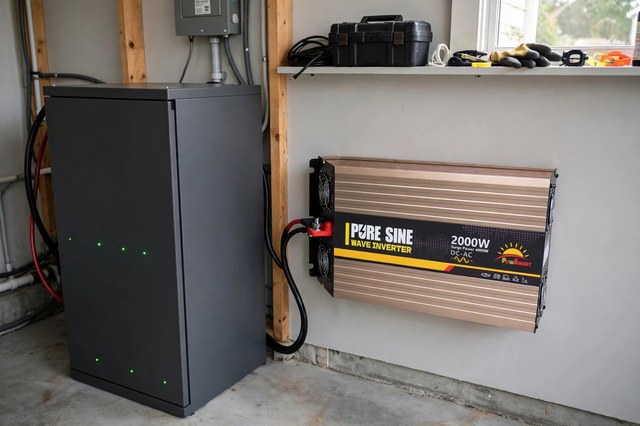
In a separate system, by contrast, inverter and battery are independent: a failed battery is replaced alone, and capacity grows one standard battery at a time from any matching supplier.
The Price Is Not Out YetThe third piece of fine print is the simplest: there is no price yet, so there is no total cost yet. Early access until November 4 is registration, not purchase, and the price will only be revealed at the US launch on November 5. The base price is unknown, expansion batteries are bought separately, and the cost of a fully expanded three-system setup is therefore unknowable today. Any article totalling it up now is guessing, and this one will not. That makes it an unpriced buy, not a bad one: wait for November 5, price the base unit plus the batteries you actually need, and compare that total with a separate setup.
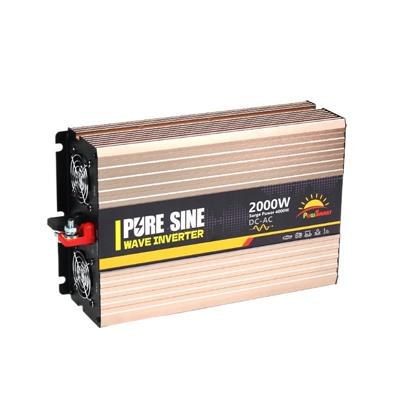
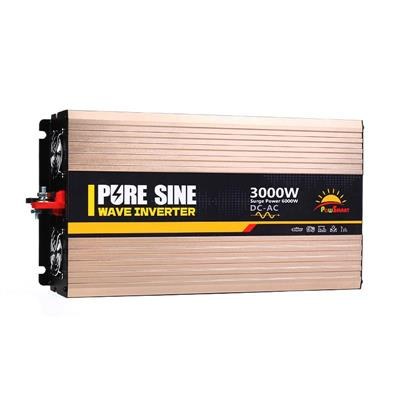
The Separate-System AlternativeA separate system starts from the load list, not from a box. Add up the watts of what you must run — fridge, lights, router, pump — and pick a pure sine wave inverter in the 300W to 6,000W range that covers that total with headroom for motor start-up surges. A 2,000W unit comfortably runs a fridge with lights and a TV, while a 3,000W unit adds room for a microwave or washing machine. Then pair it with standard 12V, 24V, or 48V LiFePO4 batteries from the open market, in whatever capacity your budget and outage history justify.
The advantages are practical: any matching battery brand works, a failed part is replaced alone, capacity grows in small steps, and every component's price is visible today. The trade-off is assembling it yourself or with an installer, without an integrated box's single-app polish.
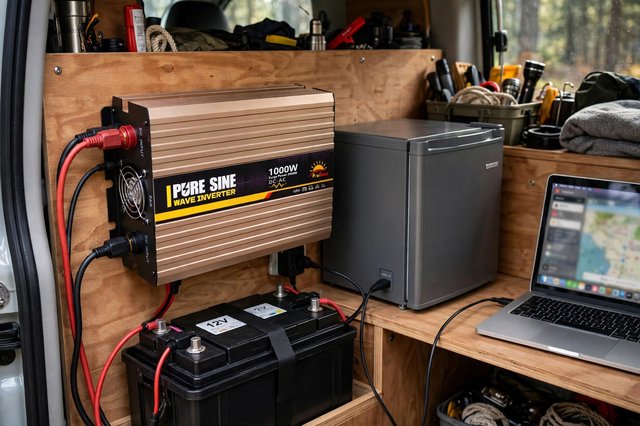
Step 1: List must-run loads from their rating labels and total them. Step 2: Add surge headroom — fridge and pump motors draw several times rated power at start-up. Step 3: Size the battery by hours: divide watt-hours by load for a theoretical runtime, discounted for losses. A 2,560Wh battery gives about five theoretical hours at 500W, but 0.8 at 3,200W — the load decides. Step 4: Choose voltage: 12V for small car/camping setups, 24V or 48V for larger home backup.
Our 2000W pure sine wave inverter and 3000W pure sine wave inverter cover the most common home-backup and RV loads, and the full REP pure sine wave inverter series runs from 300W to 5000W in 12V, 24V, and 48V versions.
FAQYes, with a qualification: about 100kWh is three fully expanded systems linked by a HUB A1, not one unit. One unit expands to 33.28kWh; the base holds 2.56kWh.
It depends on load: a theoretical 0.8 hours at full 3.2kW, but about five theoretical hours at a modest 500W before losses. Size by your load list, not the headline.
No — only BLUETTI's own B300K/B500K batteries, plus the HUB A1 for parallel systems, locking future expansion to one supplier.
At the US launch on November 5, 2026; early access until November 4 is registration only.
A separate pure sine wave inverter sized to your load list, with standard 12V/24V/48V LiFePO4 batteries from any supplier — parts replaced individually, expansion in small steps, prices visible today.
Bottom line: The Apex 200 is strong and well-designed, but its headline capacity belongs to a three-system setup, its expansion stays inside one brand, and its price arrives November 5. If you like integrated polish and can wait, shortlist it. If you want open batteries and a price you can total today, a separate inverter sized to your loads — as in our earlier look at a small-battery V2L system — is simpler. Either way, start from the load list.
Contact Zhejiang Sunrise New Energy Co., Ltd. via cninverter.com to size an inverter for your home backup, RV, or off-grid setup — tell us your must-run loads and battery voltage.

We use cookies to enhance your browsing experience, serve personalized ads or content, and analyze our traffic. By clicking "Accept All", you consent to our use of cookies.