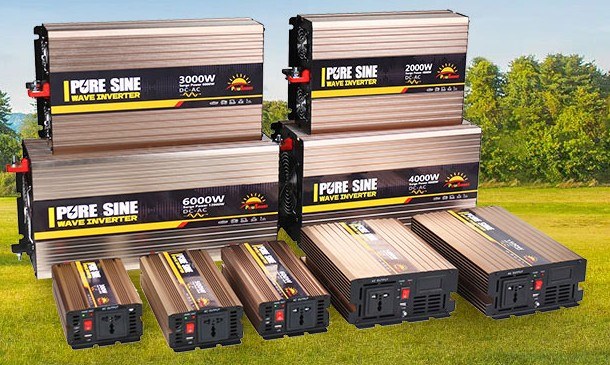
For most car camping setups, a 300W to 1,000W pure sine wave inverter is the right size: it covers LED lights, phone and camera charging, a laptop and a 12V car fridge running at the same time. You only need to step up to 1,500W–2,000W if you add an electric kettle, a coffee maker or other heating appliances. This guide from Zhejiang Sunrise New Energy Co., Ltd. shows how to work out your own number in about five minutes.
What Do Campers Actually Plug In?Start with the loads, not with the inverter catalogue. Most camping gear is surprisingly light on power. Typical running wattages look like this:
The jump comes from anything that makes heat. An electric kettle typically draws 800–1,500W, and a small coffee maker or hair dryer is in the same range. One heating appliance can outweigh everything else in the tent combined, which is why the first sizing question is always: are you heating anything, or just lighting, cooling and charging?
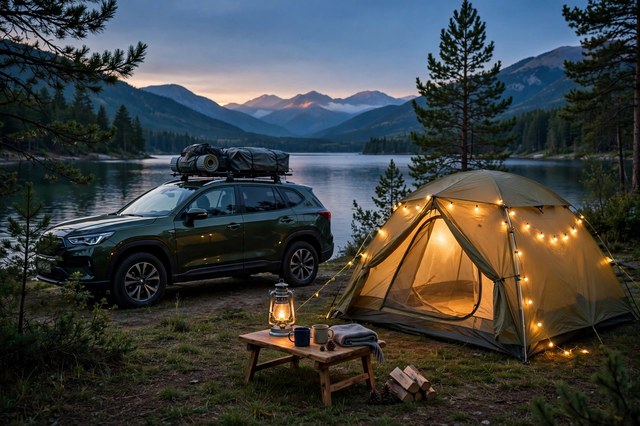
Add together everything that will realistically run at the same moment, then add 20–30% headroom. Worked example for a typical evening at camp:
That is 150W running at once. Even allowing headroom and the fridge compressor's brief start-up surge — compressors can draw several times their running watts for a split second — a 300W to 500W pure sine wave inverter handles this comfortably, and leaves room for a camera charger or a fan.
Now add a 1,200W kettle to boil water for dinner. The simultaneous total jumps past 1,300W, and with headroom you are shopping for a 1,500W to 2,000W inverter instead. Neither answer is wrong; they are answers for two different camping styles. Buy for the biggest load you will genuinely use, not the biggest load you can imagine.
A larger inverter idles with a slightly higher standby draw and runs less efficiently at very light loads. It will not damage anything, but on a small starter battery the extra idle draw shortens your runtime. The sweet spot is one size above your calculated total, not three.
Why Choose Pure Sine Wave for Camping?Choose pure sine wave, because the two loads campers care about most — compressor fridges and laptop or camera chargers — run cooler, quieter and more reliably on it. A modified sine wave inverter can make fridge compressors buzz and run hot, and some chargers refuse to work or charge slowly. Pure sine wave output matches household mains power, so anything you would plug in at home behaves the same way at the campsite. The price difference at camping sizes is small; the reliability difference is not.
How Long Will Your Car Battery Last?An inverter can only spend the energy your battery holds, so runtime maths matters as much as wattage. A typical 12V 60Ah starter battery stores about 720Wh on paper, but a starter battery should not be drained deeply — plan on using roughly half of it, around 300–360Wh, if you still want the engine to start in the morning.
Against that budget:
The practical rules: run the engine for a while each day to recharge, treat the inverter's low-voltage alarm as a stop signal, and consider a separate auxiliary battery if you camp for several days without driving. A small solar panel topping up the battery during the day stretches the same setup much further.
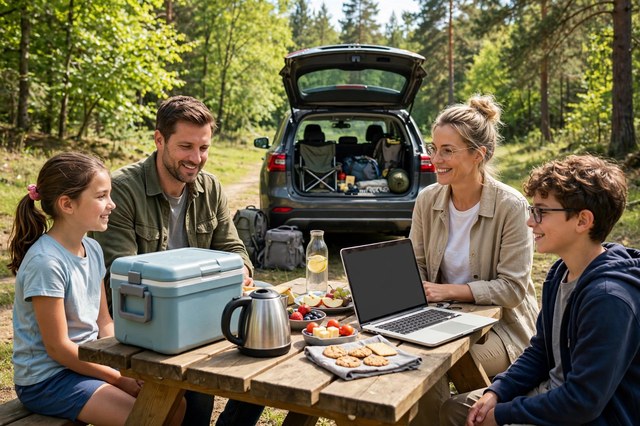
Up to about 150W, the cigarette lighter socket is fine. Above that, connect directly to the battery with proper cables and a fuse close to the battery terminal. Lighter sockets are usually fused around 10–15A, so they suit the lights-and-phones style of camping only. A fridge-plus-laptop setup, and anything involving a kettle, belongs on a direct battery connection — our car inverter safety guide covers cable sizing, fuse placement and cooling in detail.
Quick Sizing Guide by Camping Style
Can I run a car fridge all night on a 500W inverter?
Yes. A typical 12V compressor fridge draws only about 40–60W while running and cycles off between runs, so a 500W pure sine wave inverter has ample headroom — just watch the battery budget and heed the low-voltage alarm.
Is a 1,000W inverter enough for a coffee maker?
Usually not comfortably. Many coffee makers draw 800–1,500W, which leaves a 1,000W inverter at or over its limit. Check the appliance's rating plate and choose an inverter at least 20–30% above it.
Will camping loads flatten my starter battery?
They can if you run heavy loads for hours with the engine off. Keep the total energy use within roughly half the battery's capacity, run the engine daily to recharge, or fit an auxiliary battery for longer trips.
Size It Once, Camp Without Thinking About ItThe right camping inverter is the one that covers your real simultaneous loads with modest headroom, in pure sine wave, on a battery budget you have actually calculated. Do that maths once at home and power stops being something you think about at the campsite.
Zhejiang Sunrise New Energy Co., Ltd. supplies pure sine wave inverters from 300W to 6000W for cars, RVs, trucks and off-grid use. Tell us what you plan to run at camp and how long you stay off-grid, and we will recommend the right size. Visit cninverter.com or contact us: WhatsApp 86 17706649699, email Long@cninverter.com.

We use cookies to enhance your browsing experience, serve personalized ads or content, and analyze our traffic. By clicking "Accept All", you consent to our use of cookies.