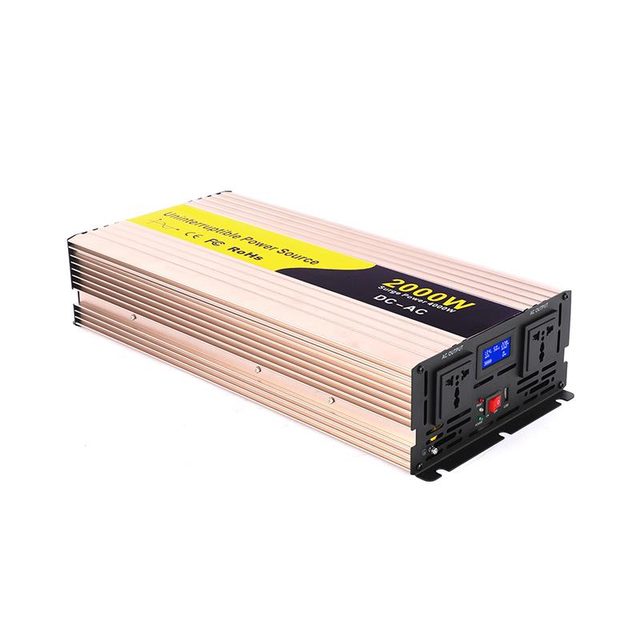
A home backup inverter keeps your essential loads running during an outage — typically the refrigerator, lights, Wi-Fi router, phone chargers and a few small appliances — and the right size depends on which of those loads must run at the same time, not on the size of your house. Work through a written checklist before you buy: list the critical loads, total their running watts, allow for motor starting surges, match the battery to the hours you need, and choose pure sine wave output. This guide from Zhejiang Sunrise New Energy Co., Ltd. walks through each step.
What Should a Home Backup System Actually Power?Start by separating essential loads from everything else, because a backup system is sized for essentials, not for running the whole home at once. In most homes the essential list is short:
Loads that usually stay off backup include electric kettles, ovens, water heaters, washing machines and air conditioners. They draw 1,000W or more each, drain a battery quickly, and are rarely needed to get through a typical outage safely. Writing this list down — with a watt figure beside each item — is the single most useful step in the whole process.

Add the running watts of everything that will be on at the same time, then choose an inverter with a continuous rating above that total and a surge rating that covers your largest motor starting.
For the example list above — fridge, lights, router, laptop and TV — the simultaneous total is often in the range of 400W to 700W. A 1,000W to 2,000W pure sine wave inverter then provides comfortable headroom for the refrigerator's starting surge on top of the other loads. Homes that must also run a well pump, a larger freezer or power tools during an outage move up to 3,000W or more, again based on the written list rather than a guess.
Motors and compressors draw several times their running power for a brief moment when they start. A refrigerator rated at 150W running may briefly need two to three times that at start-up. If the inverter's surge rating cannot cover that moment while other loads are already running, the system shuts down even though the running total looked fine on paper. Check both numbers — continuous and surge — before you buy.
Modern home electronics are designed for the clean waveform supplied by the grid, and pure sine wave output reproduces that waveform. Fridge compressors, chargers, routers and LED drivers run as designed on it, without the buzzing, extra heat or nuisance shutdowns that a lower-quality waveform can cause. For a system that protects food, communications and work equipment, pure sine wave is the safe default.
How Much Battery Do You Need?Battery size decides how long the backup lasts, while inverter size decides what it can run — the two choices are separate. Estimate the energy you need with a simple calculation:
Energy needed (Wh) = average load (W) × hours of backup wanted
If your essentials average about 300W and you want six hours of cover, you need roughly 1,800Wh of usable energy. A 12V 200Ah battery stores 2,400Wh in total, but the usable share depends on the battery type and how deeply it is designed to discharge, so allow margin rather than planning to empty it. Larger homes, longer outages or heavier loads point to 24V or 48V battery banks, which handle high power with lower current and thinner cables.
Also decide how the battery recharges. Options include charging from the grid between outages, from solar panels, or both. A system that can recharge from solar keeps working through a long outage instead of lasting only as long as its first charge.
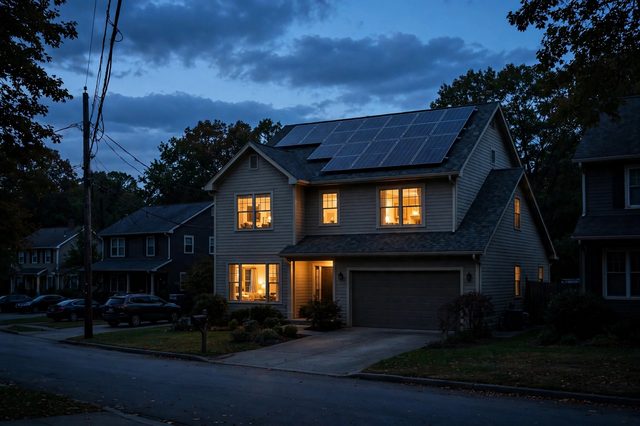
A backup system must never feed power back into the grid wiring, and changeover should be deliberate and clearly labelled. Use a proper transfer switch or a clearly separated backup circuit installed by a qualified electrician, so utility workers and your own household are protected. Keep the inverter in a dry, ventilated place, use correctly sized cables and fusing on the DC side, and keep connections short and tight.
Two practical habits matter after installation. First, test the system before you need it: switch to backup, run the essential loads together, and confirm run time roughly matches your calculation. Second, re-check the load list when your home changes — a new freezer, a home office or a medical device can quietly outgrow a system that once fitted well.
Can a backup inverter run my whole house?
In principle a very large system can, but most home backup systems are deliberately sized for essential loads only, which keeps the inverter and battery affordable and the run time long. Whole-home cover needs a much larger battery bank and a load-by-load assessment.
How long will a home backup inverter run?
It depends on the average load and the usable battery energy. A 300W average load on about 1,800Wh of usable energy lasts roughly six hours, before inverter losses. Halve the load and you roughly double the time.
Do I need solar panels for a home backup inverter?
No. A battery and inverter charged from the grid already cover short outages. Solar charging adds value when outages are long or frequent, because the battery can recharge during the day instead of only between grid returns.
Build Your Checklist Before the Next OutageThe homes that cope best with an outage are the ones where someone wrote the load list in advance. List your essentials, total the watts, allow for surges, match the battery to the hours you want, and choose pure sine wave output — then the inverter size mostly chooses itself.
Zhejiang Sunrise New Energy Co., Ltd. supplies pure sine wave inverters and home energy storage systems for backup and off-grid use. Tell us your essential loads, your battery voltage and how many hours of backup you want, and we will recommend the right size. Visit cninverter.com or contact us: WhatsApp 86 17706649699, email Long@cninverter.com.

We use cookies to enhance your browsing experience, serve personalized ads or content, and analyze our traffic. By clicking "Accept All", you consent to our use of cookies.