Renault's Trafic E-Tech work van comes with vehicle-to-load (V2L) on every trim — but Renault has published no kW figure for it. UK orders opened on 5 November 2026, from £38,000 excluding VAT, first deliveries due mid-2027. A buyer can order today and still cannot answer the one question that matters on a jobsite: how much power can it deliver?
What Renault AnnouncedThe Trafic E-Tech is Renault's first software-defined vehicle, built at Sandouville in France, with over-the-air updates. The mid-size electric van comes in Advance and Extra trims, panel van and crew van bodies, and two lengths: L1 at 4.87 metres and L2 at 5.27 metres. Two batteries are offered, 60kWh or 81kWh, and the larger gives a range of up to 292 miles, per Autotrader, 5 November 2026.
Charging runs on an 800V architecture, the first in a UK mid-size electric van, and Renault says the battery charges from 15% to 80% in about 20 minutes. No DC peak charging figure is given here, because the sources disagree: Renault's press release states one number and the UK launch specification tables state lower ones. In practice: cargo volume 5.1 cubic metres in L1 and 5.8 in L2, room for up to three Euro pallets, a maximum payload of 1.3 tonnes, towing of up to 2.0 tonnes, and a height of 1.89 metres.
V2L Is Standard — But the kW Number Is MissingV2L is listed on the Advance trim, and the Extra adds a 230V socket in the cargo area plus what Renault calls standard V2L bidirectional power. Renault's press release of 19 November 2025 says V2L can supply power from an interface in the cab charging area, or through an adapter, to run tools and laptops. The same van also carries vehicle-to-grid (V2G) through a bidirectional charger, so it can feed power back to the grid — but no V2G power figure is published either.
That missing number is the whole story. A 230V socket tells you the voltage, not the power. Without a kW rating, nobody can say whether the van will run a drill battery charger, a laptop and a small heater at once, or a heavier tool at all. The adapter's price and form are unpublished too, so the cost of using V2L is unknown. Motor power is left out for the same reason as the charging peak: Renault's press release and Autotrader give different figures.
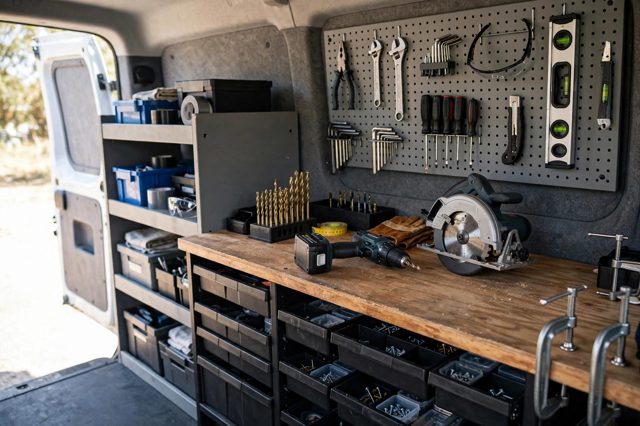
Compare it with the Hyundai Staria Load Electric, covered here on 12 November. The Staria is already on sale in Australia with a known V2L output of up to 4kW, so buyers can check their load list against it first. The Trafic is the opposite case: UK orders only just opened, first deliveries are more than half a year away, and the power figure is still unpublished. Ordering now means trusting that the number, whenever it appears, will match your work — a risk a trades business does not need.
Renault's smaller car tells a different story. The Renault 5 E-Tech, covered here on 3 November, offers V2G in the Netherlands — a family hatchback story about selling power back to the grid. The Trafic is a commercial story about powering tools on site, and the two uses need different answers. A hatchback owner can wait for the grid scheme; a van owner needs the number first.
| Model | Market | V2L power | Status |
|---|---|---|---|
| Renault Trafic E-Tech | UK | Not published | Orders open 5 Nov 2026; deliveries mid-2027 |
| Hyundai Staria Load Electric | Australia | Up to 4kW | On sale |
| MG MGU9 ute | Australia | 6.6kW | On sale |
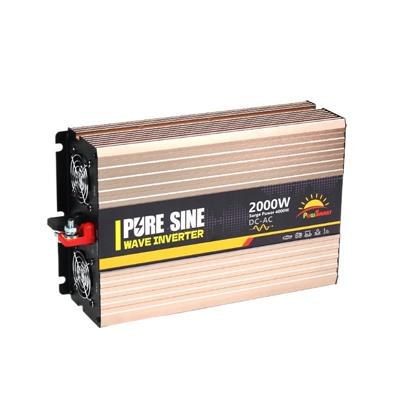
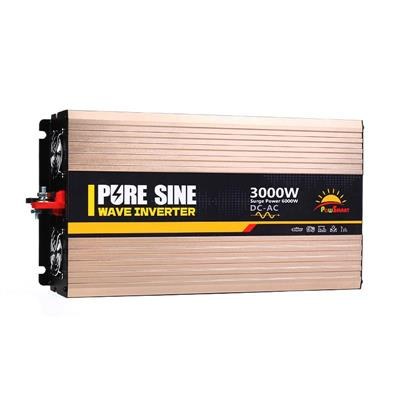
For van owners who do not want to wait until mid-2027 — or to gamble on an unpublished number — a standalone pure sine wave inverter is the direct alternative. Sunrise New Energy (Powsmart) makes the REP5000 pure sine wave inverter, rated at 5000W continuous with 10000W surge, in 12V, 24V and 48V versions. Its pure sine wave output (THD below 3%) matches household mains, safe for laptops and sensitive electronics. The REP3000 is rated at 3000W continuous with 6000W peak for mid-size loads, and the full REP range runs from 300W to 5000W, so each load list gets its own size.
The power figure is known before you buy, and the inverter works on the diesel van, truck or RV you already own — no new vehicle, no waiting list, no UK-only limit. It also moves between vehicles. The limit: a standalone inverter is not a home backup system. V2L is not V2H, and neither replaces a properly installed home battery system.
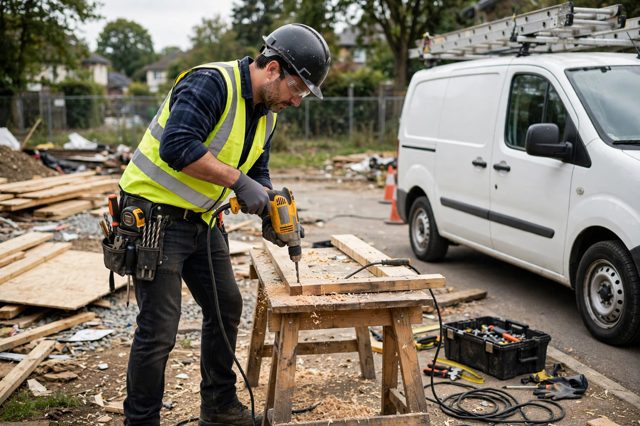
Sizing a standalone inverter takes four steps. First, list your loads in watts from each rating plate and add them up — the total decides the inverter size. Second, leave room for motor start-up: motors draw two to three times their rated power briefly, so pick an inverter whose surge rating covers the spike; the REP5000's 10000W surge covers it. Third, match the battery voltage — 12V, 24V or 48V; at high power, a higher-voltage battery delivers the same watts at much lower current. Fourth, wire and fuse to the manual: cable size and fuse ratings always follow the manufacturer's instructions.
Frequently Asked QuestionsYes. V2L is listed on the Advance trim, and the Extra adds a 230V cargo-area socket plus standard V2L bidirectional power. But Renault has published no kW figure, so the output is still unknown.
UK orders opened on 5 November 2026, from £38,000 excluding VAT, with first deliveries due in mid-2027. Prices and specifications for other markets are unpublished.
Nobody can say yet. Without a published kW rating, there is no way to check a tool list against the van's output — and a 230V socket voltage is not a power rating.
Yes, through a bidirectional charger, so it can feed power back to the grid. Renault has published no V2G power figure, and V2G is a separate function from V2L.
Yes. A standalone pure sine wave inverter gives a known power rating — 3000W continuous with 6000W peak for the REP3000, or 5000W continuous with 10000W surge for the REP5000 — and it works on the van you already own.
The Trafic E-Tech electric is a serious work van — 800V charging, up to 292 miles of range, up to 1.3 tonnes of payload — and V2L on every trim is a genuine plus. But standard equipment is not usable power, and until Renault publishes the kW figure, the van's V2L is a promise, not a specification. If your work cannot wait for mid-2027 or that number, size a standalone inverter to your load list. If you work from a van or camp off-grid, contact Sunrise New Energy (Powsmart) through cninverter.com with your load list — we will help you size the right inverter. See also: Hyundai Staria Load Electric V2L: 4kW Power, $21,000 Premium and GMC Sierra EV V2L: 10.2kW Power, Not on Every Trim.

We use cookies to enhance your browsing experience, serve personalized ads or content, and analyze our traffic. By clicking "Accept All", you consent to our use of cookies.