Anker's new SOLIX S5000 goes on sale in the United States on October 27, and its headline number is hard to miss: 4,500W of continuous output from a 5kWh box that can grow to 30kWh. But that growth has a hard limit buyers should understand before ordering: no matter how many batteries you add, the output stays at 4,500W. Capacity grows; power does not. For a home backup plan, that distinction matters more than the headline.
What Anker AnnouncedThe S5000, announced on October 9, 2026, is a 5,024Wh lithium iron phosphate (LiFePO4) portable power station. Its key specifications, as reported at launch, are:
On price, Anker has been unusually transparent: the US list price is $3,599.99, with a launch price of $2,499.99 from October 27. Customers who register by October 26 and buy between October 27 and November 9 can receive a $699 gift bundle (2-year extended warranty, Anker Prime charging station, Smart Generator DC charging cable). Only the US launch has been announced so far.
What "Expands to 30kWh" Really MeansThe S5000 accepts up to five extra battery packs, taking capacity from 5kWh to 30kWh. That expands only one thing: how long the power lasts, not how much power you can draw at once.
Think of it as a water tank and a tap: adding batteries makes the tank bigger, but the tap — the 4,500W inverter inside — stays the same size. A 30kWh system at a full 4,500W load would theoretically run about six and a half hours; at 1,000W, roughly a day. Either way, any load combination above 4,500W is off the table, with one battery or six.
So ask before expanding: will your loads ever exceed 4,500W at once? A fridge, lights, router and chargers sit far below that line; add a water heater, large air conditioner and induction cooktop together and you cross it quickly. If the answer is "maybe, one day," a fixed-output unit leaves replacing the whole machine as your only upgrade path.
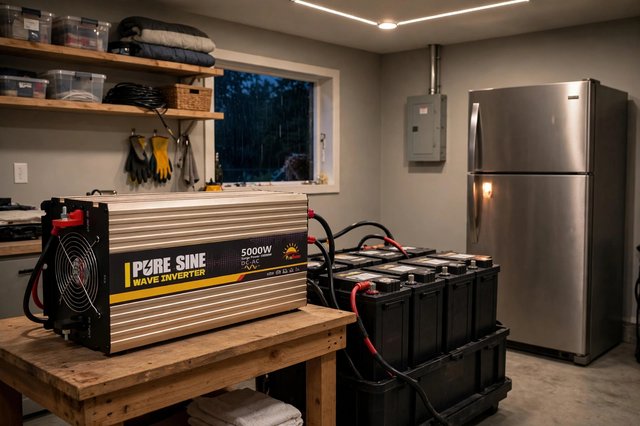
Anker's published runtime figures illustrate the point. In manufacturer testing, a refrigerator, router, coffee maker, lights and phones ran about 48 hours; a refrigerator alone about 86 hours; a window air conditioner about 25 hours. These are manufacturer test results, not guarantees — real runtimes depend on actual appliance draw, temperature and battery age. Anker also claims 96% efficiency at a light 1,000W load under OptiSave 2.0, carrying a TÜV SÜD A Runtime rating (manufacturer and rating-body claims).
Is 44kg "Portable"?At 97 lb with wheels and a handle, the S5000 is movable rather than portable in the usual sense — stairs, vehicles and uneven ground are a different story. For a fixed home backup role, buyers are effectively paying for wheels, a handle and an all-in-one enclosure they may never need. That is a fair trade for plug-and-play convenience, but it is worth naming: you are buying convenience, not just capacity.
One more unknown: expansion battery prices have not been announced. Anyone planning a 30kWh system today cannot yet calculate the full cost — budget for the base unit now and treat expansion pricing as an open item.
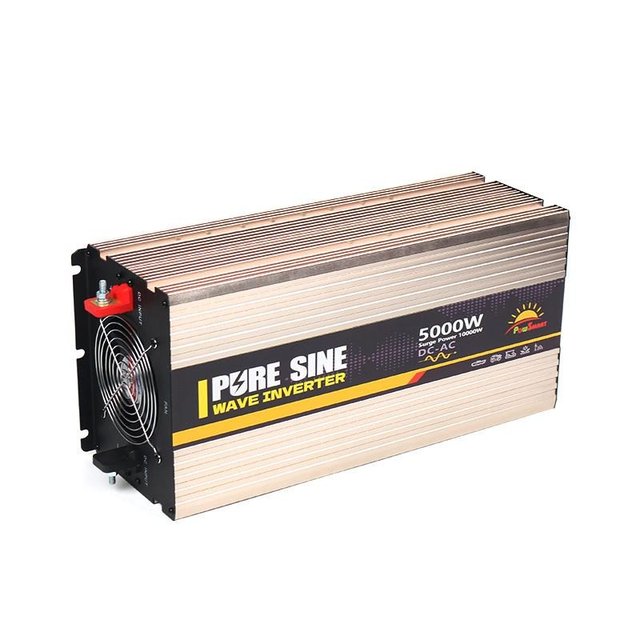
The Modular Alternative: Size the Inverter, Then the BatteryThe alternative is the split approach: a standalone pure sine wave inverter sized to your peak load, paired with a battery bank sized to your runtime. Need 5,000W or 6,000W today? That exists now in the REP pure sine wave range (300W to 5000W whole machines, 12V, 24V and 48V options, plus matching PCBA boards). If your loads grow later, you add batteries without touching the inverter; if one part fails, you replace that part, not the whole system.
The honest trade-off: a split system needs basic wiring, or an electrician, and is less plug-and-play than an all-in-one box. What you gain is a system where power and energy are decided separately — the inverter is chosen once for your heaviest load, and batteries are added whenever runtime needs grow.
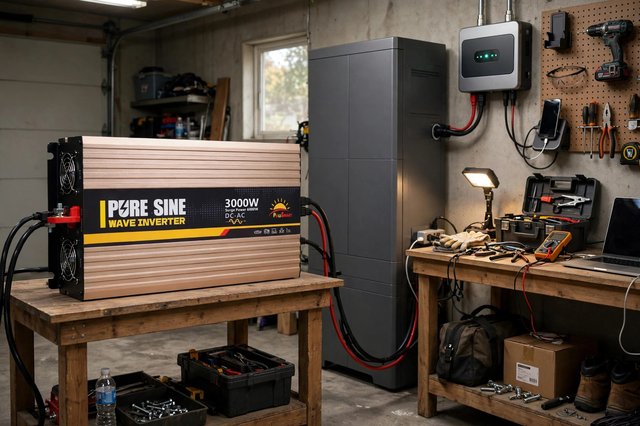
Step 1: List your must-run loads. Note every appliance you need during an outage, with each one's running watts from its label.
Step 2: Add starting surges. Fridge, pump and air-conditioner motors draw several times their running watts for a few seconds at start-up; size for the largest realistic combination, including one surge.
Step 3: Compare with 4,500W — and with the next size up. Comfortably under 4,500W, a fixed-output unit like the S5000 is a strong, simple choice. Near or above that line, a 5000W or 6000W-class standalone inverter gives headroom no added battery can provide.
Step 4: Size the battery for runtime, not headlines. Divide battery capacity (Wh) by average load (W) for a rough runtime, then discount for inverter losses.
For the 5000W class, see the 5000W pure sine wave inverter and the full REP pure sine wave inverter series. Our earlier piece on Anker's home storage system without a public price tag covers what you can and cannot calculate before you buy.
FAQNo. Extra batteries raise capacity from 5kWh to 30kWh, so it runs longer, but continuous output stays at 4,500W and peak at 8,000W.
In the US, the list price is $3,599.99 with a launch price of $2,499.99 from October 27, 2026. Expansion battery prices have not been announced.
It can power many essentials at once, but only up to 4,500W. Several large appliances running together can exceed that limit — check your combined load first.
When your peak load is at or above 4,500W, when you want to expand capacity later without replacing the inverter, or when you want to replace one component at a time.
For sensitive electronics — laptops, TVs, medical devices and modern appliance controls — yes. Pure sine wave output matches mains quality and avoids the buzzing, overheating and malfunction risk of modified sine wave output.
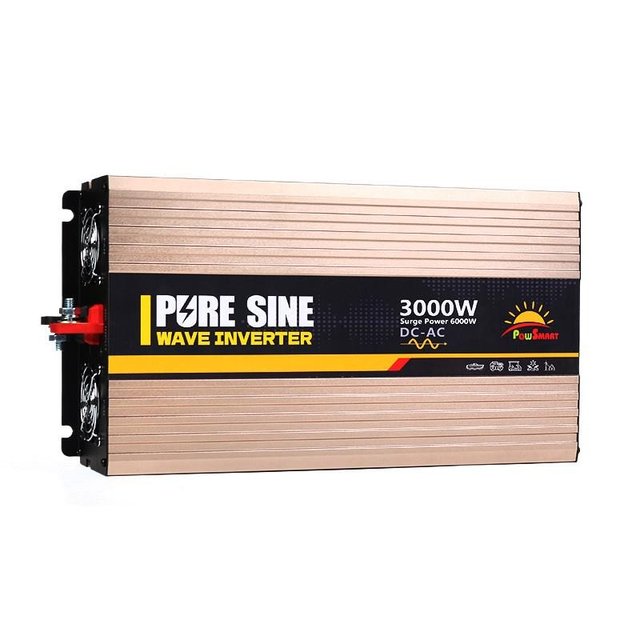
The S5000 is a strong, honestly priced all-in-one for households whose loads fit under 4,500W. Just buy it for the power it has today, not the capacity it might reach tomorrow: 4,500W fixed, even at 30kWh. If your loads might outgrow that ceiling, size a standalone pure sine wave inverter for the peak first, then add battery capacity as needed. Contact us to discuss your load list and find the right inverter size for your home, RV or off-grid setup.

We use cookies to enhance your browsing experience, serve personalized ads or content, and analyze our traffic. By clicking "Accept All", you consent to our use of cookies.