BYD's new flash chargers in Indonesia can refill an EV battery from 10% to 97% in about nine minutes — but only because each charger carries its own battery storage. The headline number is real progress for long-distance driving, yet it solves a different problem from the one most households face: getting power out of a battery to run a fridge, lights, or tools during an outage or a camping trip. Understanding that distinction is the key to reading this news correctly.
On October 14, 2026, BYD announced its flash-charging network in Jakarta — the first deployment of the technology outside China. The headline figures are striking: a single charging port can deliver up to 1,500kW, and the charger itself integrates an energy storage system (ESS). The new Danza D9 and Z9 GT — Danza is the brand name used in Indonesia, where Denza faces a trademark dispute — are pure-electric models, and the D9 is the first model to combine the second-generation Blade battery with flash charging. The chargers support plug-and-charge, so drivers plug in and the session authenticates and pays automatically, and BYD says a T-shaped suspension design reduces cable weight.
Why 1,500kW Needs Storage FirstA 1,500kW charger does not simply pull that power straight from the local grid. For scale, 1,500kW is roughly the draw of hundreds of homes running at once — far beyond what a typical street-level grid connection can hand over on demand. That is why the charger carries its own storage: the ESS charges steadily from the grid, then discharges in a short, intense burst into the car. Storage sizing is the hidden main character of this technology. The faster the charger, the bigger the buffer it needs, and the more carefully that buffer must be matched to local grid capacity, expected traffic, and duty cycles. Flash charging is, at its core, a storage story wearing a charging story's clothes.
The nine-minute figure comes with qualifiers that matter. BYD's manufacturer claim is that a second-generation Blade battery (lithium iron phosphate) charges from 10% to 70% in about 5 minutes and from 10% to 97% in about 9 minutes, under the company's stated conditions; at -30°C, the claimed 20% to 97% time is 12 minutes. An on-site test in Jakarta reportedly recorded about 5 minutes 48 seconds to 70% and 9 minutes 43 seconds to 97% — close to the claim, but a reminder that real-world times vary with battery temperature, starting charge, and charger availability. Treat "about nine minutes" as a best-case figure for compatible cars, not a guarantee for every EV at every station.
Three Limits Before You Plan Around ItFirst, coverage is still tiny: the network starts at 10 Danza stores, with a target of 100 sites in Indonesia by December 2026. Second, full speed is reserved for cars with a compatible second-generation Blade battery — the network is open to all brands, but other cars will not charge at the headline rate. Third, this is public infrastructure on someone else's timetable. If you live far from a planned site, or your car cannot use the top speed, the nine-minute promise changes nothing about your daily charging routine.
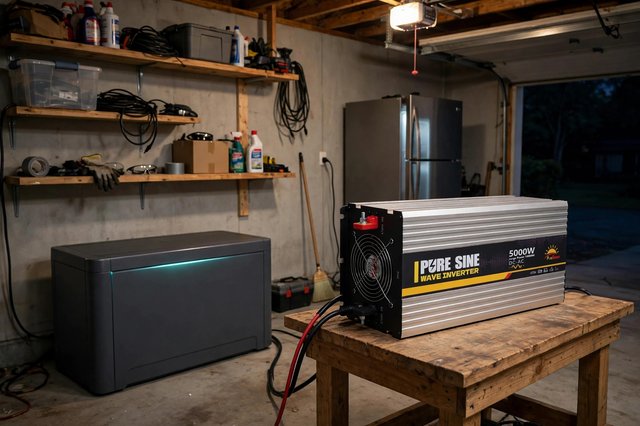
What Flash Charging Does Not DoFlash charging answers the question "how fast can power get into the car?" It does not answer "how do I get power out for my home or campsite?" A flash charger gives you no camping outlet and no blackout backup. Those jobs still belong to a separate system: a battery plus an inverter that converts stored DC power into the AC power your appliances use. Waiting for a public fast-charging network to solve home backup is waiting for the wrong technology.
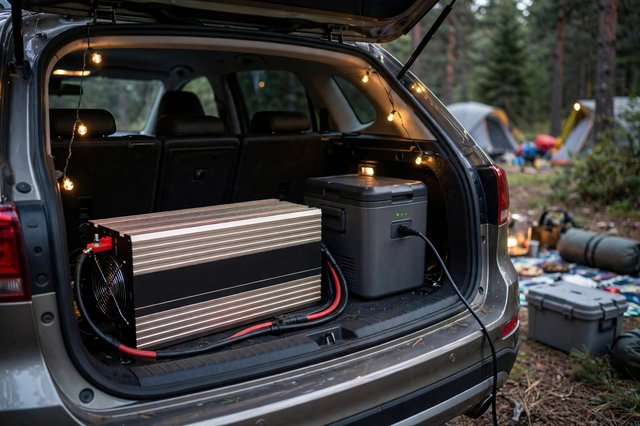
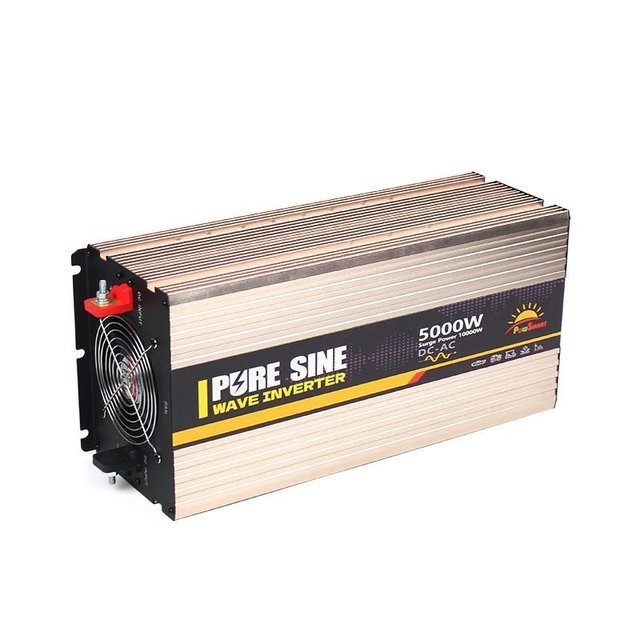
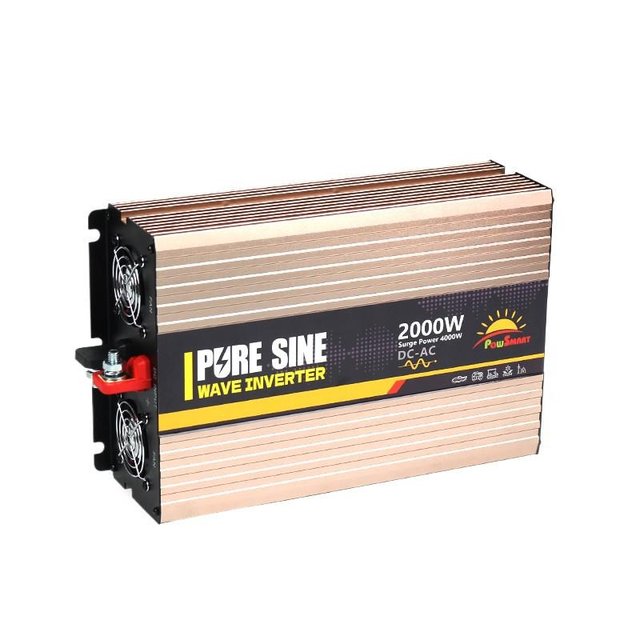
A standalone pure sine wave inverter does not depend on any carmaker's rollout. You pick the size from your critical loads — a fridge, a few lights, a laptop, a phone charger, or power tools — and pair it with a battery sized to how long those loads must run. The REP pure sine wave inverter series from Zhejiang Sunrise New Energy Co., Ltd. covers 300W to 6000W, so a small setup for camping gear and a larger one for home essentials are different products, not different promises. See the 3000W pure sine wave inverter and the 2000W pure sine wave inverter, or browse the full REP pure sine wave inverter series.
How to Size a Home or Car Backup Inverter in 4 StepsStep 1: List your critical loads. Write down each appliance, its running watts, and any startup surge (motors surge well above their running watts). Step 2: Add them up, then add margin. Size the inverter above your simultaneous total so a fridge compressor kicking in does not trip the system. Step 3: Size the battery to runtime, not just watts. A 1000W load for one hour needs roughly 1000Wh of usable stored energy before inverter losses; double the battery if you need two hours. Step 4: Choose pure sine wave output. Sensitive electronics, medical devices, and modern fridge controls run cleaner and safer on pure sine wave power than on modified sine wave power.
FAQNo. It launched in Indonesia in October 2026, starting at 10 Danza stores, with a target of 100 sites by December 2026. It is the first flash-charging deployment outside China.
No. The network is open to all brands, but the top speed is only for cars with a compatible second-generation Blade battery. Other cars will charge more slowly.
No. Fast charging puts power into a car quickly; a home backup inverter takes power out of a battery to run your appliances. They solve opposite problems, and most households need the second one first.
It depends on your load list. A few hundred watts covers lights, phones, and a laptop; a fridge plus lights typically needs 1000W–2000W; tools and larger appliances push toward 3000W and above. Size from your actual loads, not from a headline number.
BYD's nine-minute charge is a genuine breakthrough — and a reminder that storage, not just charging speed, is what makes modern power systems work. The same principle applies at home: the right battery, matched to the right inverter, sized to your real loads, is what keeps the lights on. You do not need to wait for a charging network to get there. If you are planning home backup, car camping power, or an off-grid setup, contact Zhejiang Sunrise New Energy Co., Ltd. through cninverter.com and we will help you size a pure sine wave inverter for your loads. For a related read on the other side of vehicle power, see our earlier article Tesla V2H Needs a Powerwall First.

We use cookies to enhance your browsing experience, serve personalized ads or content, and analyze our traffic. By clicking "Accept All", you consent to our use of cookies.