Walk into any modern home, glance at a solar farm, or peek inside the control room of a manufacturing plant, and you’ll find a device that’s quietly revolutionizing how we use electricity: the inverter. Yet for many people, this critical piece of technology remains a mystery. What does it actually do? Is it just a "converter" with a fancy name? Far from it. Inverters are the unsung heroes that bridge the gap between raw electrical energy and the devices we rely on every day. Let’s dive deep into their capabilities, applications, and why they’re indispensable in our energy-driven world.
At its core, an inverter performs one fundamental but game-changing task: it converts direct current (DC) electricity into alternating current (AC) electricity. To understand why this matters, we need to recall the two types of electrical current and their roles.
DC electricity flows in a single, steady direction—think of the power from a AA battery, a car’s 12V system, or the panels in a solar array. AC electricity, by contrast, alternates its flow direction at regular intervals (50 or 60 times per second in most countries) and is the standard for powering homes, businesses, and nearly all commercial appliances. This is because AC is easier to transmit over long distances and can be adjusted to different voltage levels efficiently.
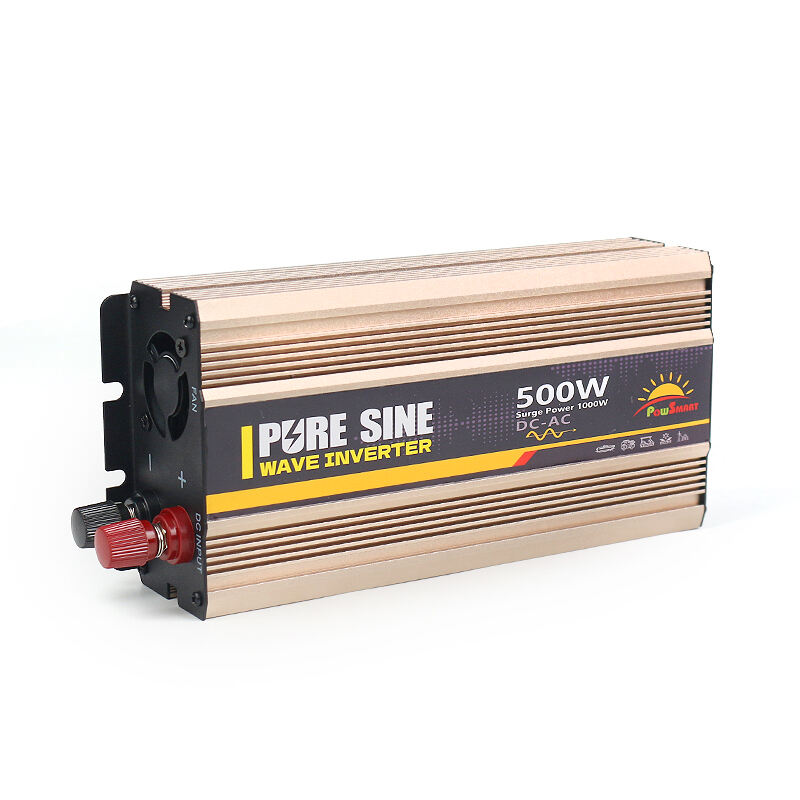
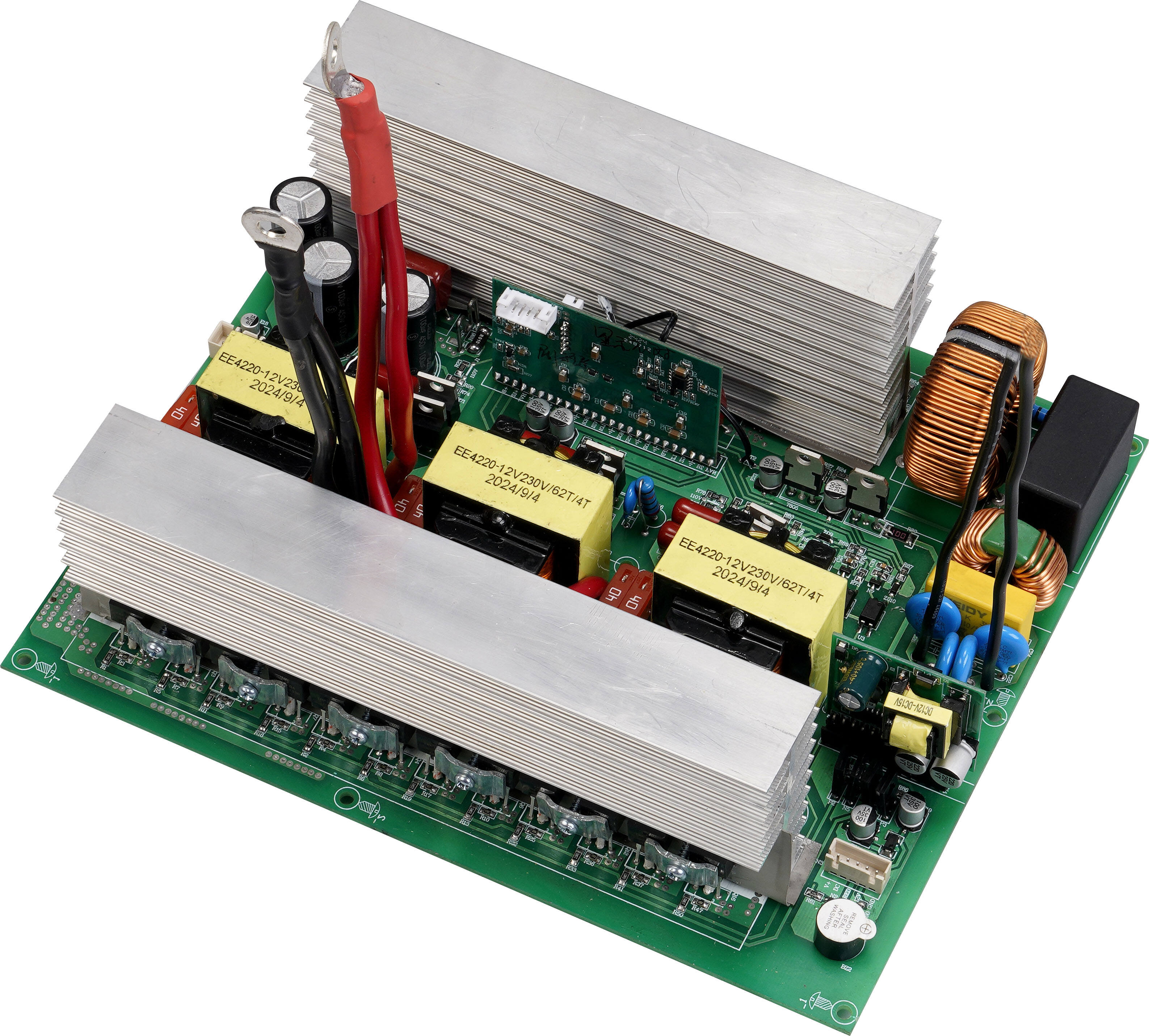
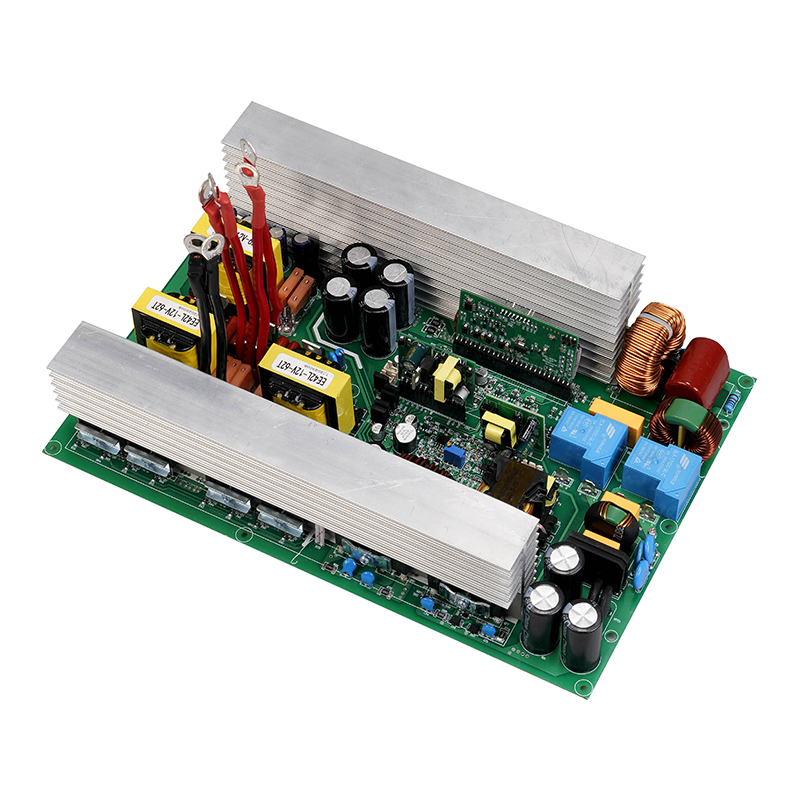
But an inverter is more than just a "translator" between DC and AC. Modern inverters come packed with components like power semiconductor circuits (IGBTs or MOSFETs), capacitors, and microcontrollers that enable precise control over the output. This means they don’t just convert current—they optimize it.
The Core Capabilities: Beyond Simple Conversion
1. DC-to-AC Conversion: The Foundation
Let’s start with the basics. The conversion process begins when DC power enters the inverter. The power semiconductor circuits switch the DC current on and off rapidly, creating a rough AC waveform. Capacitors then smooth out this waveform, and filters refine it into the clean, stable AC power that’s safe for your laptop, refrigerator, or industrial motor. This process happens in milliseconds, ensuring a seamless supply of power without fluctuations.
2. Voltage and Frequency Regulation: Tailoring Power to Needs
Not all devices use the same voltage or frequency. A desktop computer in the U.S. runs on 120V/60Hz AC, while a washing machine in Europe uses 230V/50Hz. Inverters solve this problem by adjusting both voltage and frequency to match the device’s requirements. Microcontrollers monitor the output in real time, making tiny adjustments to keep the power consistent—even if the input DC power varies (like when sunlight dims for solar panels).
This regulation is crucial for sensitive electronics. A sudden voltage spike could fry a smartphone, while a drop could cause a server to crash. Inverters act as a "buffer" that prevents these disasters.
3. Grid Synchronization: Playing Nice with the Power Grid
For solar or wind energy systems that feed power back into the public grid (net metering), inverters have a vital job: grid synchronization. They match the frequency and phase of the inverter’s AC output to the grid’s, ensuring the power being fed back is compatible. Without this, connecting renewable energy systems to the grid would be impossible—or even dangerous, as mismatched power could damage grid infrastructure.
Where Inverters Shine: Real-World Applications
Inverters aren’t just for large-scale energy projects—they’re everywhere, from your kitchen to outer space. Here are the key areas where they make a difference:
1. Renewable Energy: The Heart of Solar and Wind Systems
Solar panels generate DC power, but your home uses AC. Without an inverter, that solar energy would be useless for powering your TV or lights. String inverters (connected to a series of panels) and microinverters (attached to individual panels) are the backbone of residential solar systems, converting sunlight into usable power.
Wind turbines work similarly: the turbine’s generator produces AC, but it’s variable frequency (depending on wind speed). An inverter converts this to stable, grid-compatible AC. In off-grid systems (like remote cabins), inverters pair with batteries to store DC power and convert it to AC on demand—no grid connection needed.
2. Home Appliances: Efficiency and Precision
Next time you use an inverter air conditioner or washing machine, thank the built-in inverter. Traditional appliances use fixed-speed motors that turn on and off repeatedly (e.g., an AC that blasts cold air until the room cools, then shuts off). Inverter-equipped appliances adjust the motor speed continuously: an inverter AC cools the room gradually and maintains the temperature, using 30-50% less energy than non-inverter models.
The same logic applies to refrigerators, dishwashers, and even power tools—inverters make them quieter, more durable, and more energy-efficient.
3. Backup Power and UPS Systems
Uninterruptible Power Supply (UPS) systems rely on inverters to keep critical devices running during outages. When the grid is working, the UPS charges a battery (DC). When the power goes out, the inverter instantly converts the battery’s DC power to AC, powering computers, servers, medical equipment, or home essentials without a flicker. Unlike generators, inverters produce clean power (no voltage spikes) and run silently.
4. Industrial and Commercial Use
In factories, inverters control the speed of motors in conveyor belts, pumps, and fans—adjusting power to match production needs instead of running at full speed 24/7. This cuts energy costs and reduces wear on machinery. In data centers, inverters ensure stable power for servers, while in electric vehicles (EVs), they convert DC power from the battery to AC to drive the motor (and even feed power back to the grid during regenerative braking).
Why Inverters Matter: Key Advantages
- Energy Efficiency: By matching power output to demand (instead of wasting energy on constant full speed), inverters reduce electricity use and lower bills—critical for both homes and businesses aiming to cut costs and carbon footprints.
- Stable Power Quality: Clean, regulated AC power protects sensitive electronics from damage, reducing maintenance and replacement costs.
- Renewable Energy Integration: Without inverters, the global shift to solar and wind power would be impossible. They’re the link that turns renewable energy into a viable alternative to fossil fuels.
- Versatility: Inverters come in all sizes—from tiny ones for camping (powering a phone charger) to massive units for solar farms (handling megawatts of power).
The Future of Inverters: What’s Next?
Like all technology, inverters are evolving fast. Here are the trends to watch:
- Higher Efficiency: Researchers are developing new semiconductor materials (like silicon carbide) that reduce energy loss during conversion, pushing inverter efficiency above 98%.
- Smart Inverters: Connected to the internet, smart inverters can communicate with the grid—adjusting power output during peak demand, detecting outages, and even participating in "virtual power plants" (groups of inverters that act as a single energy source).
- Integration with Energy Storage: Future inverters will work seamlessly with home battery systems (like Tesla Powerwall), optimizing when to use stored energy, when to feed power to the grid, and when to draw from the grid.
- EV and Microgrid Growth: As EV adoption and microgrids (local energy networks) expand, inverters will become more specialized—handling bidirectional power flow (from grid to EV and EV to grid) and ensuring microgrids stay stable.
Conclusion: The Invisible Workhorse of Modern Energy
Inverters may not be as glamorous as solar panels or electric cars, but they’re the unsung heroes that make our modern energy ecosystem work. From converting sunlight into usable home power to keeping servers running during outages, from making appliances more efficient to enabling the shift to renewables—their capabilities are endless and essential.
As we move toward a more sustainable, energy-efficient world, inverters will only grow in importance. The next time you flip a light switch in a solar-powered home, run an energy-saving washing machine, or charge an EV, remember: an inverter is making it all possible.
Explore our range of power inverters, solar hybrid inverters, solar charge controllers, and solar panels. Our lithium batteries and solar PV systems ensure optimal energy efficiency and reliability.
No8-88 of Xingye North Road,Youli Industrial Zone,Liushi Town,Yueqing of Wenzhou City, Zhejiang Province
Copyright © 2024 Zhejiang Sunrise New Energy Co., Ltd. Privacy Policy
 EN
EN
 Hot News