The Tata Harrier.ev sold in India can power devices away from a wall socket — but only within strict limits. Vehicle-to-load (V2L) tops out at 3.3 kVA, vehicle-to-vehicle (V2V) reaches 5 kVA only for Tata-approved recipient EVs, and discharge stops at 30% charge. Both connectors are accessories you buy separately. If you need a known amount of power today, a standalone inverter sized to your load is the surer route.
What the Harrier.ev Offers: V2L and V2V in IndiaTata's official brochure (October 2026) and the Harrier.ev owner's manual, quoted in a 4 November 2026 buyer guide, describe two separate power-sharing functions. V2L runs external devices, at up to 3.3 kVA. V2V charges another EV, at up to 5 kVA, but only one Tata has approved as compatible. Each function uses its own connector, and neither comes as standard equipment.
Every figure here applies to the India-market Harrier.ev; Tata has not published the same specification for other markets. Figures stay in kVA, exactly as Tata publishes them — no conversion. Specifications vary by variant, so confirm the latest details with an authorised dealer before signing.
What the 3.3 kVA Limit Means in PracticeA 3.3 kVA ceiling is a maximum, not a promise for any single device. Add up the rated power of everything you plan to run at once and compare the total with the ceiling. Motors complicate it: a fridge compressor, a power tool or a pump can draw two to three times its rated power for a few seconds at start-up, and that surge counts against the same ceiling.
So the limit is a buying question. Lights, a laptop and phone charging use far less of the ceiling than a kettle or a heater. The manual gives no tested device list, so check the rating plate on each device you own. Work out your real total first, then decide whether 3.3 kVA covers it with room to spare — if not, size a separate inverter to the load.
The manual sets a discharge floor: at 30% state of charge, V2L and V2V stop. Owners can preset a higher floor, but 30% is the default. The car keeps enough charge for the drive home.
So the usable energy is the charge above 30%. Plan the trip first: work out what the return journey needs, set the floor above that, and treat the rest as the real budget. Anyone needing fixed power for a full day should check this first.
Are the Connectors Included?No. Both are accessories, sold separately, and V2V and V2L use different connectors — a buyer who wants both needs both parts. Before ordering, confirm the part numbers with the dealer and ask whether each connector is included in the quoted price or billed on top. That avoids the most common surprise here: a car that can share power, and no connector in the boot to do it with. Get the answers in writing for the exact variant you are buying.
Where You Cannot Use V2LThe manual bans V2L in rain or anywhere water can reach the connector, and it bans powering devices that need an uninterrupted supply — medical equipment is named explicitly. Water and a live socket are a genuine safety risk, and a battery that stops at 30% is the wrong source for anything that must never switch off. If your plan involves wet weather or critical equipment, do not build it around the car's V2L socket.
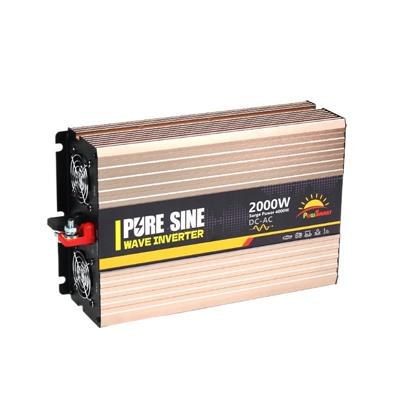
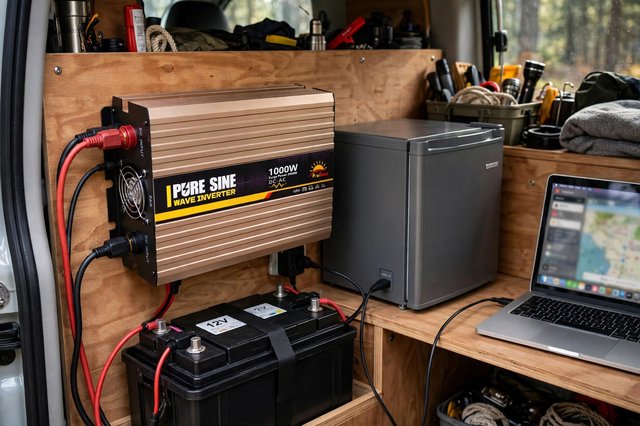
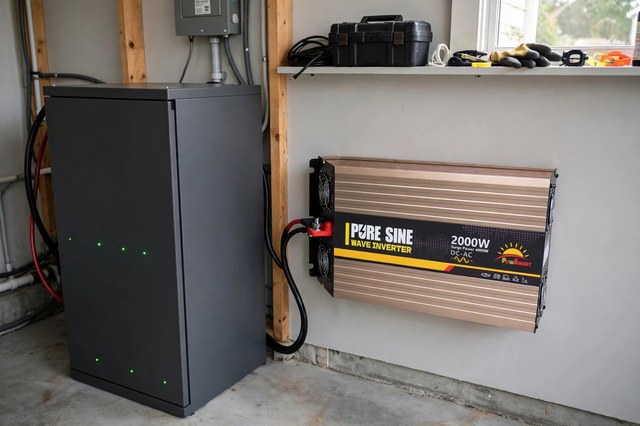
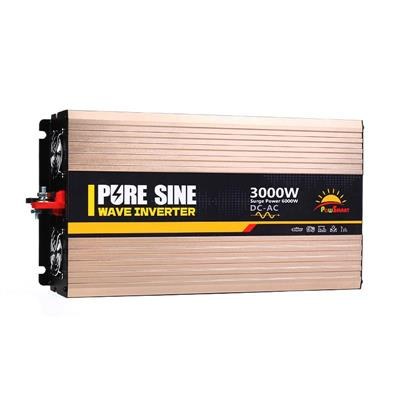
What If You Need Power Today?A built-in V2L socket is convenient when it fits, but it needs car, connector, variant and weather all lined up at once. A standalone pure sine wave inverter removes that chain. Sunrise New Energy (Powsmart) builds them from 300W to 6000W, so you pick the size from your load list. A 3000W pure sine wave inverter runs at 3000W rated with 6000W peak for motor start-up, and a 5000W model covers larger loads at 5000W rated with 10000W surge. Both come in 12V, 24V or 48V and work in any vehicle — petrol, diesel or electric — because they draw from a battery you choose, not a carmaker's accessory list.
Sizing follows the same rule as above: list every device, add the rated power, then allow two to three times rated power for motors at start-up. Pick the inverter whose continuous rating covers the total and let the peak rating absorb the surges. Wire size and fuse ratings must follow the inverter manual — never guess them. See the full REP pure sine wave inverter series for the whole range.
Two recent stories on this site show the other two cases. The MG MGU9 ute offers V2L in Australia, but MG has not published its V2L power or battery capacity, so buyers cannot check a number at all. The Foton Tunland V PHEV publishes a known 6kW V2L figure, but it was only revealed at a partner conference and is not on sale yet. The Harrier.ev is the third case: the number is known and the car is on sale in India, but it comes with a ceiling, a cutoff, separate accessories and weather limits. In each case the buyer who checks the limits first ends up with power that actually works.
Frequently Asked QuestionsNo. V2L powers individual devices, and V2V charges another EV. Neither feeds a house distribution board or the grid — that is V2H and V2G, different functions.
Yes. The V2L and V2V connectors are accessories, and they are different parts. Confirm the part numbers with an authorised dealer and check whether they are included in your quoted price before you order.
Discharge stops. The manual sets 30% as the default floor, and you can preset a higher one. Plan your return trip before spending the energy above the floor.
No. The owner's manual prohibits V2L in rain or standing water, and it prohibits powering medical devices or anything else that needs an uninterrupted supply.
Use a standalone pure sine wave inverter sized to your load. Sunrise New Energy offers models from 300W to 6000W — list your devices, allow two to three times rated power for motors at start-up, and pick the model whose continuous rating covers the total.
Bottom line: the Harrier.ev's 3.3 kVA V2L and 5 kVA V2V are real, useful features — inside their limits. Check the ceiling against your devices, respect the 30% cutoff, confirm both connector part numbers with your dealer, and keep V2L out of the rain. If you need power you can count on today, in any vehicle, talk to Sunrise New Energy (Powsmart) about a standalone pure sine wave inverter sized to your load.
Source: Tata Harrier.ev brochure (October 2026) and owner's manual, quoted in a buyer guide published 4 November 2026 (autocred.in). Figures are for the India-market Harrier.ev; specifications vary by variant.

We use cookies to enhance your browsing experience, serve personalized ads or content, and analyze our traffic. By clicking "Accept All", you consent to our use of cookies.