The Basics of Inverter Power
Before delving into the differences between peak power and rated power, it's essential to understand what an inverter is and the basic concepts of power it deals with. An inverter is a power - electronic device that plays a crucial role in modern electrical systems. Its primary function is to convert direct current (DC) into alternating current (AC). This conversion is vital because most household appliances, industrial equipment, and grid - connected systems operate on AC power, while many power sources, such as batteries in solar power systems, electric vehicles, and uninterruptible power supplies (UPS), produce DC power.
Rated Power
Rated power, often denoted as $$P_{rated}$$, is the maximum continuous power that an inverter can output under normal operating conditions. It represents the power level at which the inverter can operate steadily for an extended period without overheating or experiencing performance degradation. For example, if an inverter has a rated power of 1000 watts ($$P_{rated}=1000W$$), it can supply electrical devices with up to 1000 watts of power continuously. This value is determined by the design and specifications of the inverter, including factors such as the quality of components, cooling mechanisms, and the overall circuit design. Rated power is a key parameter when sizing an inverter for a particular application. If you plan to power a set of devices with a combined power consumption of 800 watts, you would typically choose an inverter with a rated power of at least 1000 watts to ensure stable operation and to account for any potential power surges or inefficiencies in the system.
Peak Power
Peak power, also known as surge power ( or ) , is the maximum power that an inverter can briefly output. This occurs during short - lived, high - demand situations, such as when starting electric motors, compressors, or other inductive loads. These types of loads require a large amount of current (and thus power) to overcome their initial inertia and start rotating. For instance, a refrigerator compressor might require several times its normal operating power for a fraction of a second when it first starts up. Inverters are designed to handle these short - term power spikes. A typical inverter might have a peak power rating that is 1.5 to 3 times its rated power. So, if the rated power of an inverter is 1000 watts, its peak power could be 1500 - 3000 watts, allowing it to provide the necessary extra power during startup transients of connected devices. The ability to supply peak power is crucial as it ensures that devices can start and operate smoothly without causing the inverter to shut down due to overload.
The Big Difference Revealed
The difference between peak power and rated power can vary significantly depending on the type of inverter. In general - purpose inverters for household use, the peak - to - rated power ratio often ranges from 1.5:1 to 3:1. For example, a common 1000 - watt rated - power household inverter might have a peak power of 1500 - 3000 watts. This means the difference ($$\Delta P=P_{peak}-P_{rated}$$) can be 500 - 2000 watts.
In solar inverters, which are specifically designed to handle the power output of solar panels, the ratio can also fall within a similar range. Consider a solar inverter with a rated power of 5000 watts. If its peak - to - rated power ratio is 2:1, its peak power would be 10000 watts, and the difference between peak and rated power is 5000 watts. This relatively large difference is crucial because solar panels can experience sudden changes in power output due to cloud cover passing over quickly or changes in the angle of sunlight during the day. The ability of the inverter to handle these short - term power surges ensures that the solar energy system can continue to function smoothly without interruptions.
For industrial - grade inverters, the situation can be a bit different. These inverters are built to handle more substantial loads and more complex operating conditions. In some industrial applications where the equipment has large starting currents but relatively stable running currents, the peak - to - rated power ratio might be on the lower end of the spectrum, perhaps around 1.2:1 to 1.5:1. For instance, an industrial inverter with a rated power of 100000 watts might have a peak power of 120000 - 150000 watts, resulting in a difference of 20000 - 50000 watts. The lower ratio in industrial inverters is often due to the more controlled environment in which they operate and the fact that the connected industrial equipment may be designed to start in a more regulated manner to prevent excessive power surges.
Reasons Behind the Difference
Inverter Working Principle
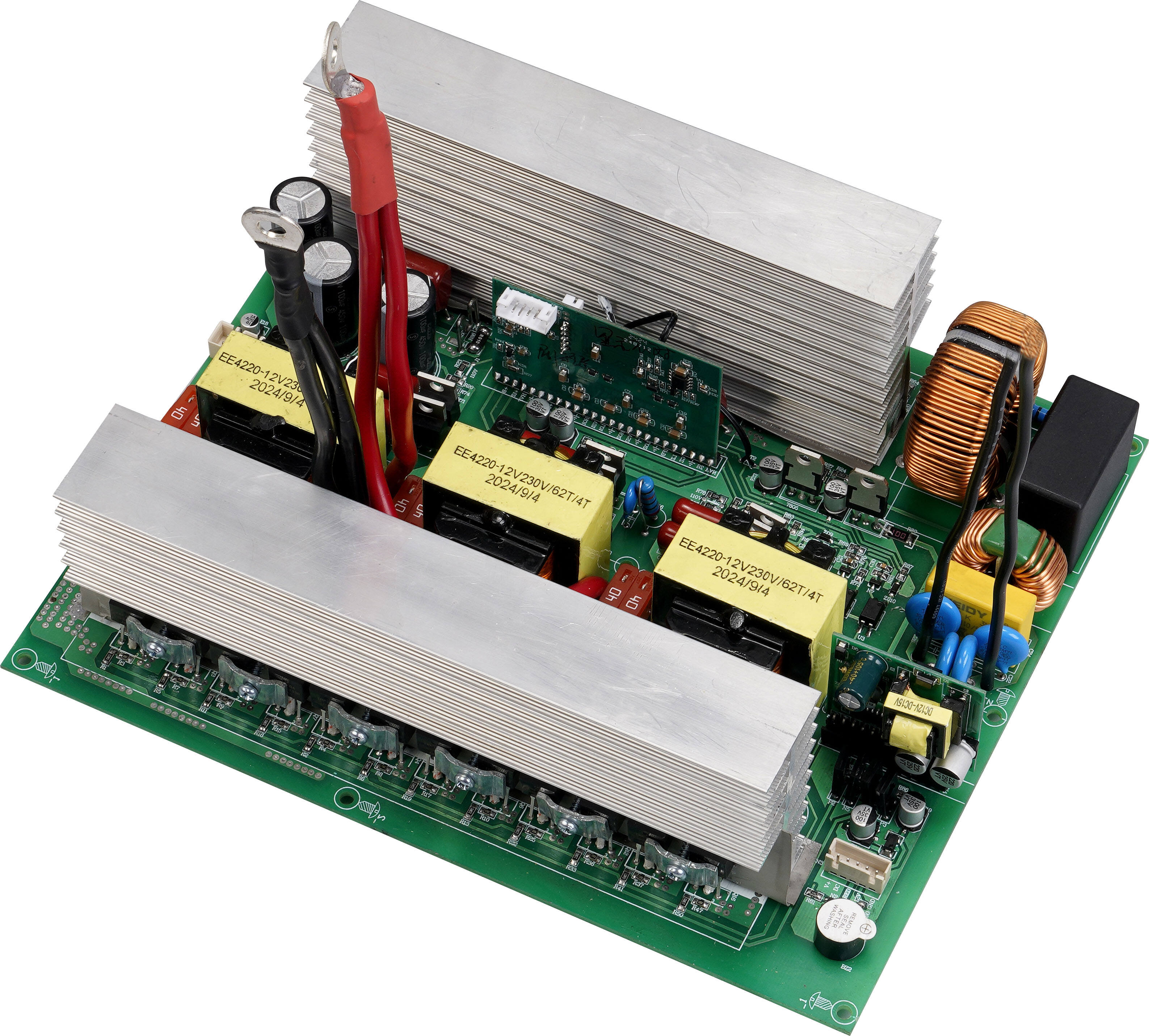
The difference between peak power and rated power is deeply rooted in the working principle of inverters. Inverters use power - semiconductor devices, such as insulated - gate bipolar transistors (IGBTs) or metal - oxide - semiconductor field - effect transistors (MOSFETs), to perform the DC - to - AC conversion. During normal operation at rated power, these semiconductor devices operate within their specified linear regions, where the voltage and current are controlled in a stable manner to provide a continuous and consistent power output.
However, when an inverter needs to supply peak power, the situation changes. In the short period of peak - power demand, the control signals to the semiconductor devices are adjusted to allow for a higher current flow. But this higher current operation pushes the devices closer to their physical limits. For example, the voltage drop across the IGBTs or MOSFETs may increase slightly during peak - power operation due to the higher current density. This increase in voltage drop leads to higher power dissipation in the form of heat (P = VI, where V is the voltage drop across the device and I is the current flowing through it). Since the heat - dissipation capabilities of the inverter are designed mainly for continuous operation at rated power, the device temperatures can rise rapidly during peak - power operation. To prevent overheating and damage to the devices, the inverter can only sustain this high - power output for a short time.
Component Characteristics
The components used in an inverter also play a significant role in determining the difference between peak and rated power. Capacitors, inductors, and transformers are common passive components in inverters. Capacitors, for instance, are used to filter the DC input and AC output voltages. Their capacitance values are selected based on the rated power requirements of the inverter to ensure stable voltage regulation. But during peak - power operation, the capacitors may experience higher voltage and current stress. If the capacitors are not designed to handle these short - term high - stress conditions, they can start to degrade or even fail.
Inductors, which are used in the conversion circuits to store and release energy, also have limitations. At rated power, the inductor operates within its designed magnetic - flux range. When the inverter needs to supply peak power, the magnetic flux in the inductor can increase significantly. If the inductor core saturates due to excessive magnetic flux, its inductance value decreases, which can disrupt the normal operation of the inverter circuit and limit the peak - power - supplying ability. Similarly, transformers in the inverter, which are used for voltage transformation, have a rated power capacity based on the magnetic properties of their cores and the wire - winding specifications. The transformer can handle short - term overloads (peak power) to a certain extent, but continuous operation at peak - power levels can cause overheating and damage to the windings and core materials.
Load Characteristics
The nature of the loads connected to the inverter is another crucial factor contributing to the peak - power and rated - power difference. Inductive loads, such as motors and transformers, have a high inrush current during startup. This inrush current is much larger than the normal operating current of the load. For example, an induction motor may have an inrush current that is 5 - 7 times its rated running current. When an inverter is connected to an inductive load, it must be able to supply this large inrush current during startup, which requires it to provide peak power.
Resistive loads, on the other hand, have a relatively stable power - consumption characteristic. They draw a current proportional to the applied voltage according to Ohm's law ($$I=\frac{V}{R}$$, where $$V$$ is the voltage across the load and $$R$$ is the resistance of the load). For a resistive load, the power (P = VI) remains relatively constant as long as the voltage and resistance do not change. Inverters connected to only resistive loads may not need to provide a large peak - power capacity compared to those connected to inductive loads. However, in real - world applications, most electrical systems have a combination of resistive, inductive, and capacitive loads, further complicating the power - demand profile and necessitating the need for inverters to have a well - defined peak - power and rated - power capability.
The 90% Error: Common Misunderstandings
It's not uncommon that about 90% of people make mistakes when it comes to understanding the difference between peak power and rated power of inverters. One of the most prevalent misunderstandings is believing that the peak power and rated power are the same or very close in value. This misconception often leads to incorrect inverter selection. For example, some users might assume that if an inverter has a rated power of 1500 watts, it can easily handle a 1500 - watt load at all times, including during startup. However, as we've learned, many loads have high inrush currents during startup, and the inverter needs to provide peak power to handle these surges. If the peak power of this 1500 - watt rated - power inverter is only 2000 watts (a relatively common ratio), and a connected load has a startup power requirement of 2500 watts, the inverter may not be able to start the load properly, or it could even be damaged due to overloading.
Another common error is confusing the application scenarios of peak power and rated power. Some individuals think that the peak - power rating is the more important factor when choosing an inverter for continuous - operation applications. In reality, for devices that run continuously, such as a home - theater system or a set of energy - efficient LED lights, the rated power is the primary consideration. The peak - power rating is mainly relevant for devices with high - inrush - current startup characteristics. For instance, a person might choose an inverter with a very high peak - power rating but a relatively low rated power for a home office setup that consists mainly of desktop computers, monitors, and printers. These devices have relatively stable power - consumption levels during operation, and a high - peak - power - rated inverter would be overkill and potentially more expensive, while not providing any real - world benefits for this type of continuous - operation load.
The root cause of these misunderstandings often lies in a lack of understanding of the basic electrical concepts and the specific requirements of different electrical loads. Many consumers are not familiar with the fact that different types of electrical devices have different power - demand profiles. Also, some manufacturers may not clearly communicate the differences between peak power and rated power in their product documentation, leading to further confusion among consumers. Additionally, the complexity of electrical engineering concepts makes it difficult for the average person to fully grasp the nuances of inverter power ratings without proper education or guidance.
Correct Understanding and Application
To avoid the common mistakes made by 90% of people, it's crucial to have a correct understanding and application of peak power and rated power in inverter selection.
When choosing an inverter, the first step is to carefully check the product parameters provided by the manufacturer. These parameters are usually clearly stated in the product manual or on the product label. Look for the rated power and peak - power specifications. The rated - power value gives you an idea of the continuous power - handling capacity of the inverter, while the peak - power value tells you how much extra power it can supply during short - term high - demand situations.
Understanding your actual power needs is also essential. If you plan to power mainly resistive loads like incandescent lights or electric heaters, which have relatively stable power - consumption characteristics, the rated power of the inverter is the primary factor to consider. You should ensure that the rated power of the inverter is slightly higher than the total power consumption of these resistive loads to account for any minor power fluctuations. For example, if you have a total of 800 watts of incandescent lights, a 1000 - watt rated - power inverter would be a suitable choice.
However, if your load includes inductive devices such as motors, compressors, or transformers, you must pay close attention to the peak - power rating. When calculating the power requirements, consider the startup power of these inductive loads. A rule of thumb is to estimate the startup power of an induction motor to be 5 - 7 times its rated running power. So, if you have a 300 - watt induction motor, its startup power could be 1500 - 2100 watts. In this case, you need to choose an inverter with a peak - power rating high enough to handle this startup surge. If the inverter's peak - power rating is too low, the motor may not start properly, or it could cause the inverter to trip due to overload.
In some applications, such as off - grid solar power systems, you also need to consider the long - term operation and energy - efficiency of the inverter. A well - sized inverter with the right balance between peak power and rated power can ensure that the solar panels can operate at their maximum power - point tracking (MPPT) efficiency. This means that the inverter can extract the maximum amount of power from the solar panels under different sunlight and temperature conditions. Over - sizing the inverter in terms of peak - power rating without considering the actual load characteristics can lead to unnecessary costs, as inverters with higher peak - power ratings are usually more expensive. On the other hand, under - sizing the inverter can result in poor system performance, frequent shutdowns, and potential damage to the inverter and the connected loads.
Conclusion
In summary, the difference between peak power and rated power in inverters is a crucial aspect that significantly impacts their performance and the proper functioning of connected electrical devices. Rated power represents the continuous power - handling capacity, while peak power is the extra power available for short - term, high - demand situations, especially during the startup of inductive loads. The difference between them can range from a 50% increase (1.5:1 ratio) to a 200% increase (3:1 ratio) in household and solar inverters, with industrial - grade inverters often having a relatively lower but still significant difference.
Understanding this difference correctly is of utmost importance. Incorrect assumptions about the relationship between peak power and rated power, which are unfortunately made by about 90% of people, can lead to improper inverter selection. This, in turn, may result in device - startup failures, inverter overloading, and potential damage to both the inverter and the connected electrical equipment.
For anyone dealing with inverters, whether in a home solar - power setup, an industrial electrical system, or a simple off - grid power supply, taking the time to understand the peak - power and rated - power specifications is essential. By accurately assessing your power needs, considering the characteristics of the loads, and carefully choosing an inverter with the appropriate power ratings, you can ensure the efficient, reliable, and safe operation of your electrical system. So, don't be part of the 90% who get it wrong. Dive deeper into the world of inverter power ratings and make informed decisions for all your power - conversion needs.

Explore our range of power inverters, solar hybrid inverters, solar charge controllers, and solar panels. Our lithium batteries and solar PV systems ensure optimal energy efficiency and reliability.
No8-88 of Xingye North Road,Youli Industrial Zone,Liushi Town,Yueqing of Wenzhou City, Zhejiang Province
Copyright © 2024 Zhejiang Sunrise New Energy Co., Ltd. Privacy Policy
 EN
EN
 Hot News