The Role of Solar Charge Controllers in System Efficiency and Energy Regulation
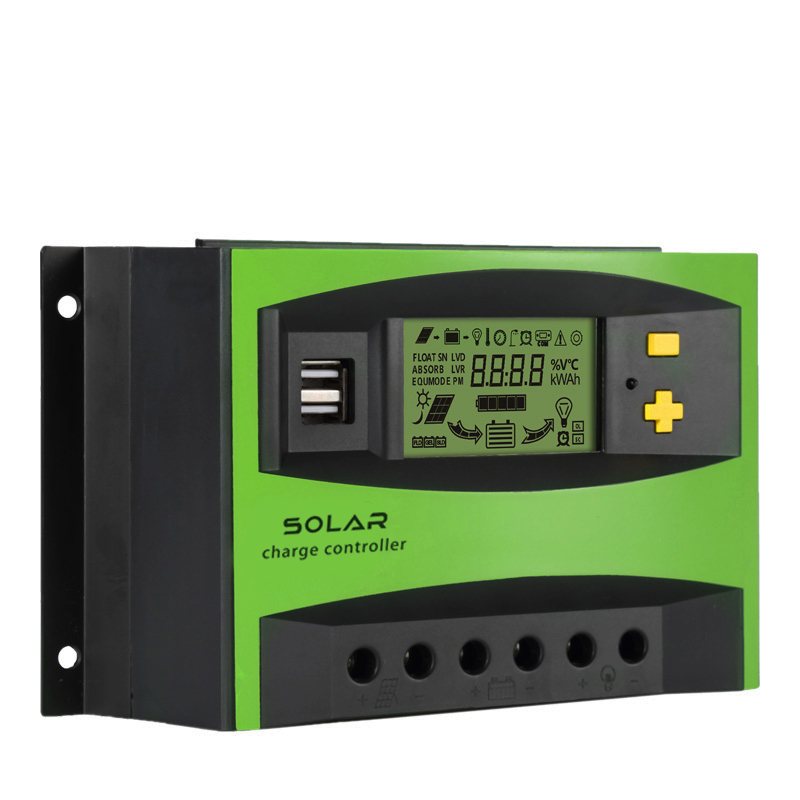
Solar charge controllers act like traffic cops for PV systems, managing how much energy moves from panels to batteries. They constantly tweak voltage levels to stop batteries from getting damaged by overcharging, which is what typically shortens their lifespan. Most good quality controllers can get around 98 percent of the sun's energy stored properly. Some high end versions come equipped with something called MPPT technology. These smart controllers look at current weather conditions and adjust accordingly so they keep pulling maximum power out of the panels even when clouds pass by or temperatures change throughout the day according to research published last year.
Today's controllers have these clever charging profiles that match up with different battery chemistries, like lithium-ion or old school lead-acid batteries. When the sun is at its strongest, these controllers focus on getting those bulk charges in first, followed by the absorption phase. Then they flip into float mode so nothing goes overboard with voltage spikes damaging things. Some folks did a study back in 2022 looking at this stuff, and what they found was pretty impressive actually. Systems running with these smart controllers cut down on nighttime energy losses by about 40% when compared to setups without any regulation at all. Makes sense really since they manage loads so precisely and know exactly when to shut off idle currents automatically.
The quality of controllers really makes a difference in how well PV systems perform. Take it from industry data where installations with top notch controllers saw batteries last about 20% longer and produced roughly 15% more energy each day over the course of a year according to a recent Department of Energy audit back in 2021. These better controllers work by stopping electricity from flowing backward when there's no sunlight and adjusting for those annoying voltage drops that happen during colder weather. The result? More reliable power generation throughout the year whether installed on homes or businesses looking to cut their energy costs.
PWM controllers work by matching the voltage coming from solar panels to what the batteries need. These devices are pretty affordable for tiny setups, but they actually throw away around 40% of the power when things aren't perfect. Think cloudy days or when part of the panel gets shaded somehow. Some tests done last year found that PWM systems only managed to capture between 60 and 70% efficiency when inputs weren't matching up properly. Because they're so straightforward, PWM controllers still find their place in small off-grid projects where budget matters most. However, anyone running bigger systems or dealing with changing environmental conditions will quickly run into limitations with these simpler controllers.
MPPT controllers work by constantly tweaking voltage and current levels so they can pull out as much power as possible from solar panels no matter what the weather throws at them. These controllers separate the panel voltage from the battery voltage, which helps them hit efficiencies around 90 to almost 98 percent even when sunlight isn't ideal. Some real world testing shows that MPPT systems actually produce about 30 percent more energy each day compared to PWM systems especially during winter months when panel voltages tend to jump up quite a bit. The smart algorithms built into these controllers also help reduce power loss from partial shading issues. For anyone running large scale solar installations or dealing with complicated array configurations, getting an MPPT controller really makes sense from both performance and cost perspectives.
Recent trials highlight the performance gap between PWM and MPPT systems:
|
Metric |
PWM Controller |
MPPT Controller |
Improvement |
|
Energy harvest (kWh/day) |
4.2 |
5.5 |
+31% |
|
Battery recharge speed |
6.1 hours |
4.3 hours |
-29% |
|
Annual ROI (5kW system) |
12% |
18% |
+50% |
Data source: Independent solar efficiency trials (2023)
For projects prioritizing energy yield, MPPT’s higher upfront cost is justified by long-term gains in efficiency and battery longevity. While PWM remains viable for small systems under 200W, MPPT dominates mid-to-large installations where maximizing every watt is critical.
Solar charge controllers keep batteries healthier because they control the voltage and current during those charging cycles properly. When batteries stay within their best charge range, usually somewhere between 20% and 80%, there's less wear and tear on both lithium ion and lead acid types. This actually makes them last much longer than when left without regulation, sometimes tripling their useful life. Most modern controllers come with temperature sensors too. These adjust how fast the battery charges based on what the temperature is doing right then. Why does this matter? Well, batteries degrade faster when it gets too hot or cold. Research shows performance drops about 20% when temps go beyond that sweet spot of around 50 to 77 degrees Fahrenheit (which translates to 10 to 25 Celsius). So keeping things cool and controlled really pays off in the long run.
Today’s controllers integrate three core protections:
These features reduce fire risk by 87% and cut average replacement costs linked to deep discharge by $240/year (Energy Storage Safety Report 2023). Multi-stage charging further enhances safety, transitioning smoothly from bulk to float mode once batteries reach 80% capacity.
MPPT charge controllers maximize energy harvest by continuously tracking the solar array’s maximum power point (MPP)—the ideal voltage-to-current ratio for peak output. Unlike basic controllers, MPPT systems adapt electrical parameters in real time to counteract shading, temperature changes, and fluctuating irradiance. A 2024 study in Nature demonstrated that AI-enhanced MPPT controllers improved energy yield by 10–15% over conventional models by processing environmental data 100 times per second.
Algorithms like Perturb and Observe (P&O) and Incremental Conductance enable microsecond-level adjustments to maintain alignment with the MPP. For instance, when cloud cover reduces panel voltage from 36V to 28V, the controller instantly increases current draw to stabilize power delivery. This precision avoids the 18–23% energy losses typical in non-MPPT systems under partial shading.
Independent testing shows MPPT technology recovers 25–30% more energy than PWM controllers in cold climates, where higher panel voltages increase potential output. In commercial systems, this translates to an additional 600–900 kWh annually per 10 kW array, significantly shortening payback periods.
A solar charge controller manages the flow of electricity between the solar panels and the batteries, ensuring batteries do not get overcharged and are charged efficiently.
MPPT controllers adjust to changing conditions to maximize energy harvest, while PWM controllers are simpler and may result in energy losses under non-ideal conditions.
An MPPT controller is ideal for larger systems or variable conditions as it significantly increases efficiency, whereas PWM controllers are suitable for smaller, budget projects.
By regulating voltage and current, preventing overcharge, and deep discharge, solar charge controllers help extend the battery life by reducing wear and maintaining optimal charge levels.
Solar charge controllers act like traffic cops for PV systems, managing how much energy moves from panels to batteries. They constantly tweak voltage levels to stop batteries from getting damaged by overcharging, which is what typically shortens their lifespan. Most good quality controllers can get around 98 percent of the sun's energy stored properly. Some high end versions come equipped with something called MPPT technology. These smart controllers look at current weather conditions and adjust accordingly so they keep pulling maximum power out of the panels even when clouds pass by or temperatures change throughout the day according to research published last year.
Today's controllers have these clever charging profiles that match up with different battery chemistries, like lithium-ion or old school lead-acid batteries. When the sun is at its strongest, these controllers focus on getting those bulk charges in first, followed by the absorption phase. Then they flip into float mode so nothing goes overboard with voltage spikes damaging things. Some folks did a study back in 2022 looking at this stuff, and what they found was pretty impressive actually. Systems running with these smart controllers cut down on nighttime energy losses by about 40% when compared to setups without any regulation at all. Makes sense really since they manage loads so precisely and know exactly when to shut off idle currents automatically.
The quality of controllers really makes a difference in how well PV systems perform. Take it from industry data where installations with top notch controllers saw batteries last about 20% longer and produced roughly 15% more energy each day over the course of a year according to a recent Department of Energy audit back in 2021. These better controllers work by stopping electricity from flowing backward when there's no sunlight and adjusting for those annoying voltage drops that happen during colder weather. The result? More reliable power generation throughout the year whether installed on homes or businesses looking to cut their energy costs.
PWM controllers work by matching the voltage coming from solar panels to what the batteries need. These devices are pretty affordable for tiny setups, but they actually throw away around 40% of the power when things aren't perfect. Think cloudy days or when part of the panel gets shaded somehow. Some tests done last year found that PWM systems only managed to capture between 60 and 70% efficiency when inputs weren't matching up properly. Because they're so straightforward, PWM controllers still find their place in small off-grid projects where budget matters most. However, anyone running bigger systems or dealing with changing environmental conditions will quickly run into limitations with these simpler controllers.
MPPT controllers work by constantly tweaking voltage and current levels so they can pull out as much power as possible from solar panels no matter what the weather throws at them. These controllers separate the panel voltage from the battery voltage, which helps them hit efficiencies around 90 to almost 98 percent even when sunlight isn't ideal. Some real world testing shows that MPPT systems actually produce about 30 percent more energy each day compared to PWM systems especially during winter months when panel voltages tend to jump up quite a bit. The smart algorithms built into these controllers also help reduce power loss from partial shading issues. For anyone running large scale solar installations or dealing with complicated array configurations, getting an MPPT controller really makes sense from both performance and cost perspectives.
Recent trials highlight the performance gap between PWM and MPPT systems:
Metric |
PWM Controller |
MPPT Controller |
Improvement |
Energy harvest (kWh/day) |
4.2 |
5.5 |
+31% |
Battery recharge speed |
6.1 hours |
4.3 hours |
-29% |
Annual ROI (5kW system) |
12% |
18% |
+50% |
Data source: Independent solar efficiency trials (2023)
For projects prioritizing energy yield, MPPT’s higher upfront cost is justified by long-term gains in efficiency and battery longevity. While PWM remains viable for small systems under 200W, MPPT dominates mid-to-large installations where maximizing every watt is critical.
Solar charge controllers keep batteries healthier because they control the voltage and current during those charging cycles properly. When batteries stay within their best charge range, usually somewhere between 20% and 80%, there's less wear and tear on both lithium ion and lead acid types. This actually makes them last much longer than when left without regulation, sometimes tripling their useful life. Most modern controllers come with temperature sensors too. These adjust how fast the battery charges based on what the temperature is doing right then. Why does this matter? Well, batteries degrade faster when it gets too hot or cold. Research shows performance drops about 20% when temps go beyond that sweet spot of around 50 to 77 degrees Fahrenheit (which translates to 10 to 25 Celsius). So keeping things cool and controlled really pays off in the long run.
Today’s controllers integrate three core protections:
These features reduce fire risk by 87% and cut average replacement costs linked to deep discharge by $240/year (Energy Storage Safety Report 2023). Multi-stage charging further enhances safety, transitioning smoothly from bulk to float mode once batteries reach 80% capacity.
MPPT charge controllers maximize energy harvest by continuously tracking the solar array’s maximum power point (MPP)—the ideal voltage-to-current ratio for peak output. Unlike basic controllers, MPPT systems adapt electrical parameters in real time to counteract shading, temperature changes, and fluctuating irradiance. A 2024 study in Nature demonstrated that AI-enhanced MPPT controllers improved energy yield by 10–15% over conventional models by processing environmental data 100 times per second.
Algorithms like Perturb and Observe (P&O) and Incremental Conductance enable microsecond-level adjustments to maintain alignment with the MPP. For instance, when cloud cover reduces panel voltage from 36V to 28V, the controller instantly increases current draw to stabilize power delivery. This precision avoids the 18–23% energy losses typical in non-MPPT systems under partial shading.
Independent testing shows MPPT technology recovers 25–30% more energy than PWM controllers in cold climates, where higher panel voltages increase potential output. In commercial systems, this translates to an additional 600–900 kWh annually per 10 kW array, significantly shortening payback periods.
A solar charge controller manages the flow of electricity between the solar panels and the batteries, ensuring batteries do not get overcharged and are charged efficiently.
MPPT controllers adjust to changing conditions to maximize energy harvest, while PWM controllers are simpler and may result in energy losses under non-ideal conditions.
An MPPT controller is ideal for larger systems or variable conditions as it significantly increases efficiency, whereas PWM controllers are suitable for smaller, budget projects.
By regulating voltage and current, preventing overcharge, and deep discharge, solar charge controllers help extend the battery life by reducing wear and maintaining optimal charge levels.
Solar charge controllers act like traffic cops for PV systems, managing how much energy moves from panels to batteries. They constantly tweak voltage levels to stop batteries from getting damaged by overcharging, which is what typically shortens their lifespan. Most good quality controllers can get around 98 percent of the sun's energy stored properly. Some high end versions come equipped with something called MPPT technology. These smart controllers look at current weather conditions and adjust accordingly so they keep pulling maximum power out of the panels even when clouds pass by or temperatures change throughout the day according to research published last year.
Today's controllers have these clever charging profiles that match up with different battery chemistries, like lithium-ion or old school lead-acid batteries. When the sun is at its strongest, these controllers focus on getting those bulk charges in first, followed by the absorption phase. Then they flip into float mode so nothing goes overboard with voltage spikes damaging things. Some folks did a study back in 2022 looking at this stuff, and what they found was pretty impressive actually. Systems running with these smart controllers cut down on nighttime energy losses by about 40% when compared to setups without any regulation at all. Makes sense really since they manage loads so precisely and know exactly when to shut off idle currents automatically.
The quality of controllers really makes a difference in how well PV systems perform. Take it from industry data where installations with top notch controllers saw batteries last about 20% longer and produced roughly 15% more energy each day over the course of a year according to a recent Department of Energy audit back in 2021. These better controllers work by stopping electricity from flowing backward when there's no sunlight and adjusting for those annoying voltage drops that happen during colder weather. The result? More reliable power generation throughout the year whether installed on homes or businesses looking to cut their energy costs.
PWM controllers work by matching the voltage coming from solar panels to what the batteries need. These devices are pretty affordable for tiny setups, but they actually throw away around 40% of the power when things aren't perfect. Think cloudy days or when part of the panel gets shaded somehow. Some tests done last year found that PWM systems only managed to capture between 60 and 70% efficiency when inputs weren't matching up properly. Because they're so straightforward, PWM controllers still find their place in small off-grid projects where budget matters most. However, anyone running bigger systems or dealing with changing environmental conditions will quickly run into limitations with these simpler controllers.
MPPT controllers work by constantly tweaking voltage and current levels so they can pull out as much power as possible from solar panels no matter what the weather throws at them. These controllers separate the panel voltage from the battery voltage, which helps them hit efficiencies around 90 to almost 98 percent even when sunlight isn't ideal. Some real world testing shows that MPPT systems actually produce about 30 percent more energy each day compared to PWM systems especially during winter months when panel voltages tend to jump up quite a bit. The smart algorithms built into these controllers also help reduce power loss from partial shading issues. For anyone running large scale solar installations or dealing with complicated array configurations, getting an MPPT controller really makes sense from both performance and cost perspectives.
Recent trials highlight the performance gap between PWM and MPPT systems:
Metric |
PWM Controller |
MPPT Controller |
Improvement |
Energy harvest (kWh/day) |
4.2 |
5.5 |
+31% |
Battery recharge speed |
6.1 hours |
4.3 hours |
-29% |
Annual ROI (5kW system) |
12% |
18% |
+50% |
Data source: Independent solar efficiency trials (2023)
For projects prioritizing energy yield, MPPT’s higher upfront cost is justified by long-term gains in efficiency and battery longevity. While PWM remains viable for small systems under 200W, MPPT dominates mid-to-large installations where maximizing every watt is critical.
Solar charge controllers keep batteries healthier because they control the voltage and current during those charging cycles properly. When batteries stay within their best charge range, usually somewhere between 20% and 80%, there's less wear and tear on both lithium ion and lead acid types. This actually makes them last much longer than when left without regulation, sometimes tripling their useful life. Most modern controllers come with temperature sensors too. These adjust how fast the battery charges based on what the temperature is doing right then. Why does this matter? Well, batteries degrade faster when it gets too hot or cold. Research shows performance drops about 20% when temps go beyond that sweet spot of around 50 to 77 degrees Fahrenheit (which translates to 10 to 25 Celsius). So keeping things cool and controlled really pays off in the long run.
Today’s controllers integrate three core protections:
These features reduce fire risk by 87% and cut average replacement costs linked to deep discharge by $240/year (Energy Storage Safety Report 2023). Multi-stage charging further enhances safety, transitioning smoothly from bulk to float mode once batteries reach 80% capacity.
MPPT charge controllers maximize energy harvest by continuously tracking the solar array’s maximum power point (MPP)—the ideal voltage-to-current ratio for peak output. Unlike basic controllers, MPPT systems adapt electrical parameters in real time to counteract shading, temperature changes, and fluctuating irradiance. A 2024 study in Nature demonstrated that AI-enhanced MPPT controllers improved energy yield by 10–15% over conventional models by processing environmental data 100 times per second.
Algorithms like Perturb and Observe (P&O) and Incremental Conductance enable microsecond-level adjustments to maintain alignment with the MPP. For instance, when cloud cover reduces panel voltage from 36V to 28V, the controller instantly increases current draw to stabilize power delivery. This precision avoids the 18–23% energy losses typical in non-MPPT systems under partial shading.
Independent testing shows MPPT technology recovers 25–30% more energy than PWM controllers in cold climates, where higher panel voltages increase potential output. In commercial systems, this translates to an additional 600–900 kWh annually per 10 kW array, significantly shortening payback periods.
A solar charge controller manages the flow of electricity between the solar panels and the batteries, ensuring batteries do not get overcharged and are charged efficiently.
MPPT controllers adjust to changing conditions to maximize energy harvest, while PWM controllers are simpler and may result in energy losses under non-ideal conditions.
An MPPT controller is ideal for larger systems or variable conditions as it significantly increases efficiency, whereas PWM controllers are suitable for smaller, budget projects.
By regulating voltage and current, preventing overcharge, and deep discharge, solar charge controllers help extend the battery life by reducing wear and maintaining optimal charge levels.
Solar charge controllers act like traffic cops for PV systems, managing how much energy moves from panels to batteries. They constantly tweak voltage levels to stop batteries from getting damaged by overcharging, which is what typically shortens their lifespan. Most good quality controllers can get around 98 percent of the sun's energy stored properly. Some high end versions come equipped with something called MPPT technology. These smart controllers look at current weather conditions and adjust accordingly so they keep pulling maximum power out of the panels even when clouds pass by or temperatures change throughout the day according to research published last year.
Today's controllers have these clever charging profiles that match up with different battery chemistries, like lithium-ion or old school lead-acid batteries. When the sun is at its strongest, these controllers focus on getting those bulk charges in first, followed by the absorption phase. Then they flip into float mode so nothing goes overboard with voltage spikes damaging things. Some folks did a study back in 2022 looking at this stuff, and what they found was pretty impressive actually. Systems running with these smart controllers cut down on nighttime energy losses by about 40% when compared to setups without any regulation at all. Makes sense really since they manage loads so precisely and know exactly when to shut off idle currents automatically.
The quality of controllers really makes a difference in how well PV systems perform. Take it from industry data where installations with top notch controllers saw batteries last about 20% longer and produced roughly 15% more energy each day over the course of a year according to a recent Department of Energy audit back in 2021. These better controllers work by stopping electricity from flowing backward when there's no sunlight and adjusting for those annoying voltage drops that happen during colder weather. The result? More reliable power generation throughout the year whether installed on homes or businesses looking to cut their energy costs.
PWM controllers work by matching the voltage coming from solar panels to what the batteries need. These devices are pretty affordable for tiny setups, but they actually throw away around 40% of the power when things aren't perfect. Think cloudy days or when part of the panel gets shaded somehow. Some tests done last year found that PWM systems only managed to capture between 60 and 70% efficiency when inputs weren't matching up properly. Because they're so straightforward, PWM controllers still find their place in small off-grid projects where budget matters most. However, anyone running bigger systems or dealing with changing environmental conditions will quickly run into limitations with these simpler controllers.
MPPT controllers work by constantly tweaking voltage and current levels so they can pull out as much power as possible from solar panels no matter what the weather throws at them. These controllers separate the panel voltage from the battery voltage, which helps them hit efficiencies around 90 to almost 98 percent even when sunlight isn't ideal. Some real world testing shows that MPPT systems actually produce about 30 percent more energy each day compared to PWM systems especially during winter months when panel voltages tend to jump up quite a bit. The smart algorithms built into these controllers also help reduce power loss from partial shading issues. For anyone running large scale solar installations or dealing with complicated array configurations, getting an MPPT controller really makes sense from both performance and cost perspectives.
Recent trials highlight the performance gap between PWM and MPPT systems:
Metric |
PWM Controller |
MPPT Controller |
Improvement |
Energy harvest (kWh/day) |
4.2 |
5.5 |
+31% |
Battery recharge speed |
6.1 hours |
4.3 hours |
-29% |
Annual ROI (5kW system) |
12% |
18% |
+50% |
Data source: Independent solar efficiency trials (2023)
For projects prioritizing energy yield, MPPT’s higher upfront cost is justified by long-term gains in efficiency and battery longevity. While PWM remains viable for small systems under 200W, MPPT dominates mid-to-large installations where maximizing every watt is critical.
Solar charge controllers keep batteries healthier because they control the voltage and current during those charging cycles properly. When batteries stay within their best charge range, usually somewhere between 20% and 80%, there's less wear and tear on both lithium ion and lead acid types. This actually makes them last much longer than when left without regulation, sometimes tripling their useful life. Most modern controllers come with temperature sensors too. These adjust how fast the battery charges based on what the temperature is doing right then. Why does this matter? Well, batteries degrade faster when it gets too hot or cold. Research shows performance drops about 20% when temps go beyond that sweet spot of around 50 to 77 degrees Fahrenheit (which translates to 10 to 25 Celsius). So keeping things cool and controlled really pays off in the long run.
Today’s controllers integrate three core protections:
These features reduce fire risk by 87% and cut average replacement costs linked to deep discharge by $240/year (Energy Storage Safety Report 2023). Multi-stage charging further enhances safety, transitioning smoothly from bulk to float mode once batteries reach 80% capacity.
MPPT charge controllers maximize energy harvest by continuously tracking the solar array’s maximum power point (MPP)—the ideal voltage-to-current ratio for peak output. Unlike basic controllers, MPPT systems adapt electrical parameters in real time to counteract shading, temperature changes, and fluctuating irradiance. A 2024 study in Nature demonstrated that AI-enhanced MPPT controllers improved energy yield by 10–15% over conventional models by processing environmental data 100 times per second.
Algorithms like Perturb and Observe (P&O) and Incremental Conductance enable microsecond-level adjustments to maintain alignment with the MPP. For instance, when cloud cover reduces panel voltage from 36V to 28V, the controller instantly increases current draw to stabilize power delivery. This precision avoids the 18–23% energy losses typical in non-MPPT systems under partial shading.
Independent testing shows MPPT technology recovers 25–30% more energy than PWM controllers in cold climates, where higher panel voltages increase potential output. In commercial systems, this translates to an additional 600–900 kWh annually per 10 kW array, significantly shortening payback periods.
A solar charge controller manages the flow of electricity between the solar panels and the batteries, ensuring batteries do not get overcharged and are charged efficiently.
MPPT controllers adjust to changing conditions to maximize energy harvest, while PWM controllers are simpler and may result in energy losses under non-ideal conditions.
An MPPT controller is ideal for larger systems or variable conditions as it significantly increases efficiency, whereas PWM controllers are suitable for smaller, budget projects.
By regulating voltage and current, preventing overcharge, and deep discharge, solar charge controllers help extend the battery life by reducing wear and maintaining optimal charge levels.

Explore our range of power inverters, solar hybrid inverters, solar charge controllers, and solar panels. Our lithium batteries and solar PV systems ensure optimal energy efficiency and reliability.
No8-88 of Xingye North Road,Youli Industrial Zone,Liushi Town,Yueqing of Wenzhou City, Zhejiang Province
Copyright © 2024 Zhejiang Sunrise New Energy Co., Ltd. Privacy Policy
 EN
EN
 Hot News