In our increasingly energy-conscious world, we invest in inverters for backup power, solar systems, or mobile power needs. But many users focus only on the price tag and capacity, overlooking a critical factor: inverter efficiency.
Think of it this way: a low-efficiency inverter is like a leaky bucket. You pay for the water (or electricity) at the source, but you lose a significant amount before it even reaches your appliances. This isn't just about wasting money; it's about putting unnecessary strain on your entire power system.
So, is low inverter efficiency simply throwing money away? In short, yes. But the good news is that you can take control. This guide will explain why efficiency matters and provide actionable tips to save electricity and extend the life of your valuable equipment.
What is Inverter Efficiency, and Why Does It Matter?
Inverter efficiency is the ratio of the AC power output (the useful power your appliances receive) to the DC power input (the power drawn from your batteries or solar panels). It's expressed as a percentage.
A 90% efficient inverter drawing 1000W from your batteries will deliver only 900W to your appliance. The remaining 100W is lost as heat.
A 98% efficient inverter under the same load delivers 980W, losing only 20W.
This difference might seem small, but over hours, days, and years, it adds up significantly in three key areas:
Higher Electricity Bills: For solar systems, lower efficiency means you need more solar panels to generate the same usable power. For battery backup, it means your batteries drain faster, requiring more frequent (and costly) grid charging.
Shorter Battery Life: The wasted energy generates heat. Excessive heat is the number one enemy of batteries, causing them to degrade much faster and need replacement sooner.
Reduced Appliance Lifespan: The heat generated by an inefficient inverter doesn't just harm the inverter itself. It can also lead to a "dirtier" power output with more voltage fluctuations, which stresses sensitive electronics like laptops, TVs, and refrigerators.
Master These Tips to Boost Efficiency, Save Money, and Protect Your Gear
You don't always need to buy a new inverter to see improvements. Here are several strategies to maximize the system you have.
1. Choose Wisely: Start with a High-Efficiency Inverter
This is the most crucial step if you're in the market for a new inverter. Don't just look at the peak efficiency number.
Look for the "Euro Efficiency" or "CEC Efficiency" Rating: This is a weighted average that reflects real-world usage across various load levels (e.g., 25%, 50%, 75% load). It's a much more accurate measure than a single peak efficiency figure.
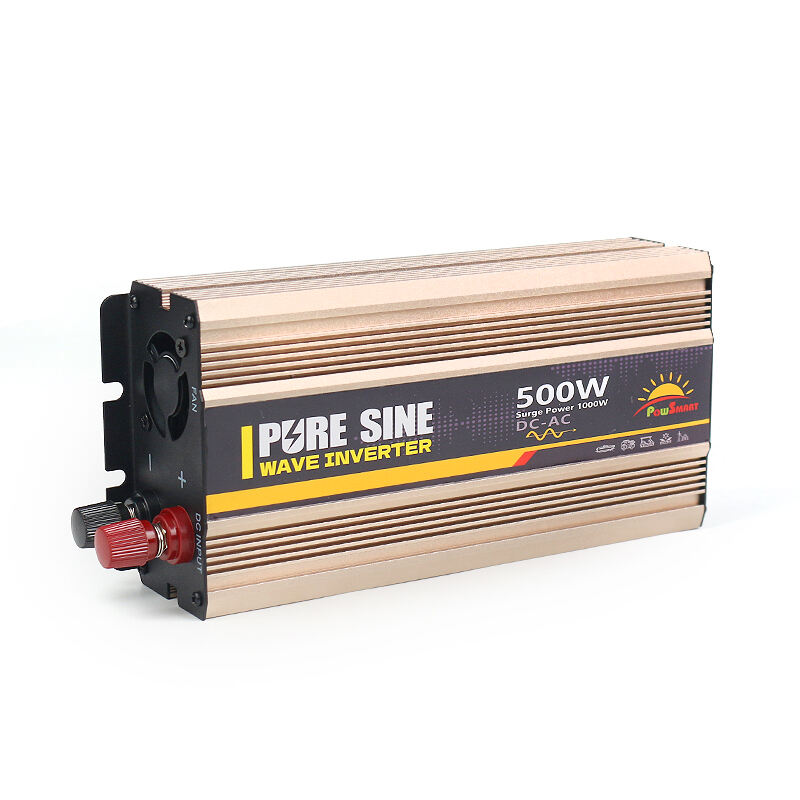
Go for Pure Sine Wave: Always choose a pure sine wave inverter over a modified sine wave. Most modern appliances are designed for the smooth curve of a pure sine wave. A modified sine wave can cause motors to run hotter, less efficiently, and can even damage sensitive devices.
2. Right-Size Your Inverter: Match the Load
Running a massive 3000W inverter to power a 50W laptop is a recipe for inefficiency. Inverters are typically most efficient at 50-80% of their rated load.
Oversized Inverter: At very low loads (10-20%), the inverter's own power consumption to run its internal electronics ("idle consumption" or "no-load loss") becomes a large percentage of the total power draw, drastically reducing efficiency.
Undersized Inverter: Running an inverter close to its maximum capacity generates extreme heat and can cause it to shut down, harming its components over time.
Action Tip: Calculate the total wattage of the appliances you plan to run simultaneously and choose an inverter with a capacity about 20-25% higher than that total.
3. Minimize "Phantom Loads" and Idle Time
Many devices consume power even when they are "off" (e.g., TVs on standby, phone chargers left plugged in). When powered by an inverter, these phantom loads force it to work 24/7 at a very low, inefficient load level.
Action Tip: Use a power strip with a switch and completely turn off clusters of electronics when not in use. This reduces the inverter's idle running time, saving a surprising amount of energy.
4. Keep It Cool: Ensure Proper Ventilation
Heat is the direct result of energy loss. The hotter your inverter runs, the less efficient it becomes, creating a vicious cycle.
Action Tip: Install your inverter in a cool, dry, and well-ventilated place. Ensure there are at least several inches of clear space around it, especially the ventilation fans. Never enclose it in a tight cabinet without airflow.
5. Maintain Your Battery Bank
An inefficient or aging battery bank forces the inverter to work harder to draw the required DC power, reducing overall system efficiency.
Action Tip: Check Connections: Ensure battery terminals are clean and tight to minimize resistance.
Water Levels: For flooded lead-acid batteries, maintain proper water levels with distilled water.
Timely Replacement: An old battery with high internal resistance will cripple your system's performance. Replace your battery bank when its performance noticeably drops.
6. Use Thick, Short DC Cables
The journey of power from your battery to the inverter is critical. Using cables that are too thin or too long creates resistance, leading to significant voltage drop and power loss before the electricity even reaches the inverter.
Action Tip: Consult a cable sizing chart. Use the thickest, shortest cables practicable for the distance between your battery bank and inverter.
Conclusion: Efficiency is an Investment
Viewing your inverter's efficiency as a key performance indicator is a shift from seeing it as just a power box to understanding it as the heart of your energy system. A high-efficiency inverter, correctly sized and well-maintained, is not an expense—it's an investment.
It pays for itself through lower electricity bills, a longer-lasting battery bank, and protected appliances. By mastering these simple tips, you stop wasting money and start powering your life smarter and more sustainably.
Ready to upgrade? When shopping, compare efficiency ratings carefully and invest in quality. Your wallet—and your devices—will thank you for years to come.
Explore our range of power inverters, solar hybrid inverters, solar charge controllers, and solar panels. Our lithium batteries and solar PV systems ensure optimal energy efficiency and reliability.
No8-88 of Xingye North Road,Youli Industrial Zone,Liushi Town,Yueqing of Wenzhou City, Zhejiang Province
Copyright © 2024 Zhejiang Sunrise New Energy Co., Ltd. Privacy Policy
 EN
EN
 Hot News